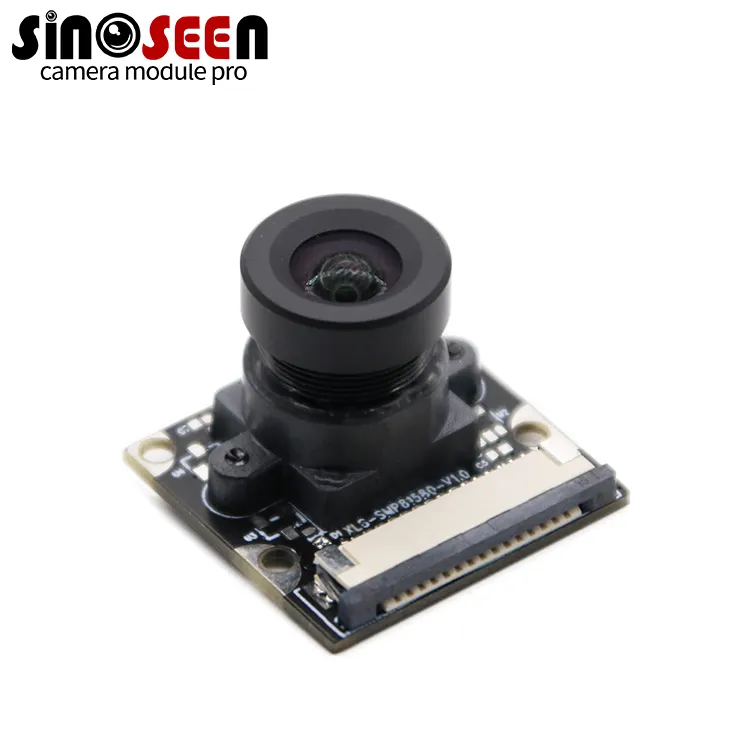
Versatile Integration and Expandability Options
The ESP32 CAM camera stands out for its remarkable integration flexibility and expandability options that accommodate diverse project requirements and future growth needs. The comprehensive GPIO pin array provides numerous connection points for sensors, actuators, displays, and other electronic components, enabling creation of complex automated systems that extend far beyond basic camera functionality. Popular expansion options include temperature sensors for environmental monitoring, PIR motion detectors for enhanced security systems, and servo motors for pan-tilt camera positioning that creates dynamic surveillance capabilities. The device integrates seamlessly with Arduino IDE programming environment, making it accessible to the vast Arduino community while supporting advanced development through ESP-IDF framework for professional applications requiring maximum performance and customization. Multiple power supply options including USB, battery, and external DC power provide deployment flexibility for permanent installations, portable applications, and remote monitoring scenarios where power infrastructure varies significantly. The microSD card slot enables virtually unlimited storage expansion, supporting cards up to 32GB or larger for extended recording sessions or high-resolution image archives that would otherwise overwhelm internal memory capacity. Communication protocols including I2C, SPI, and UART enable connection to specialized sensors and modules, allowing integration of environmental monitoring, GPS tracking, or wireless communication extensions that enhance overall system capabilities. The ESP32 CAM camera supports multiple programming languages including C++, Python, and JavaScript, accommodating developers with diverse backgrounds and enabling rapid prototyping using familiar tools and syntax. Cloud service integration extends beyond basic storage to include artificial intelligence platforms that can analyze captured images for object recognition, facial detection, or behavioral pattern analysis using machine learning algorithms. The open-source ecosystem provides extensive libraries and code examples that accelerate development while ensuring compatibility with popular platforms including Home Assistant, OpenHAB, and commercial IoT management systems. Future expansion possibilities remain virtually unlimited through over-the-air update capabilities that enable addition of new features and functionality without physical device access, ensuring long-term value and adaptability as requirements evolve and new technologies become available.

 EN
EN
 AR
AR
 DA
DA
 NL
NL
 FI
FI
 FR
FR
 DE
DE
 EL
EL
 HI
HI
 IT
IT
 JA
JA
 KO
KO
 NO
NO
 PL
PL
 PT
PT
 RO
RO
 RU
RU
 ES
ES
 SV
SV
 TL
TL
 IW
IW
 ID
ID
 SR
SR
 VI
VI
 HU
HU
 TH
TH
 TR
TR
 FA
FA
 MS
MS
 IS
IS
 AZ
AZ
 UR
UR
 BN
BN
 HA
HA
 LO
LO
 MR
MR
 MN
MN
 PA
PA
 MY
MY
 SD
SD