Innovative Camera Modules for Every Application | Sinoseen

All Categories

esp32 with camera

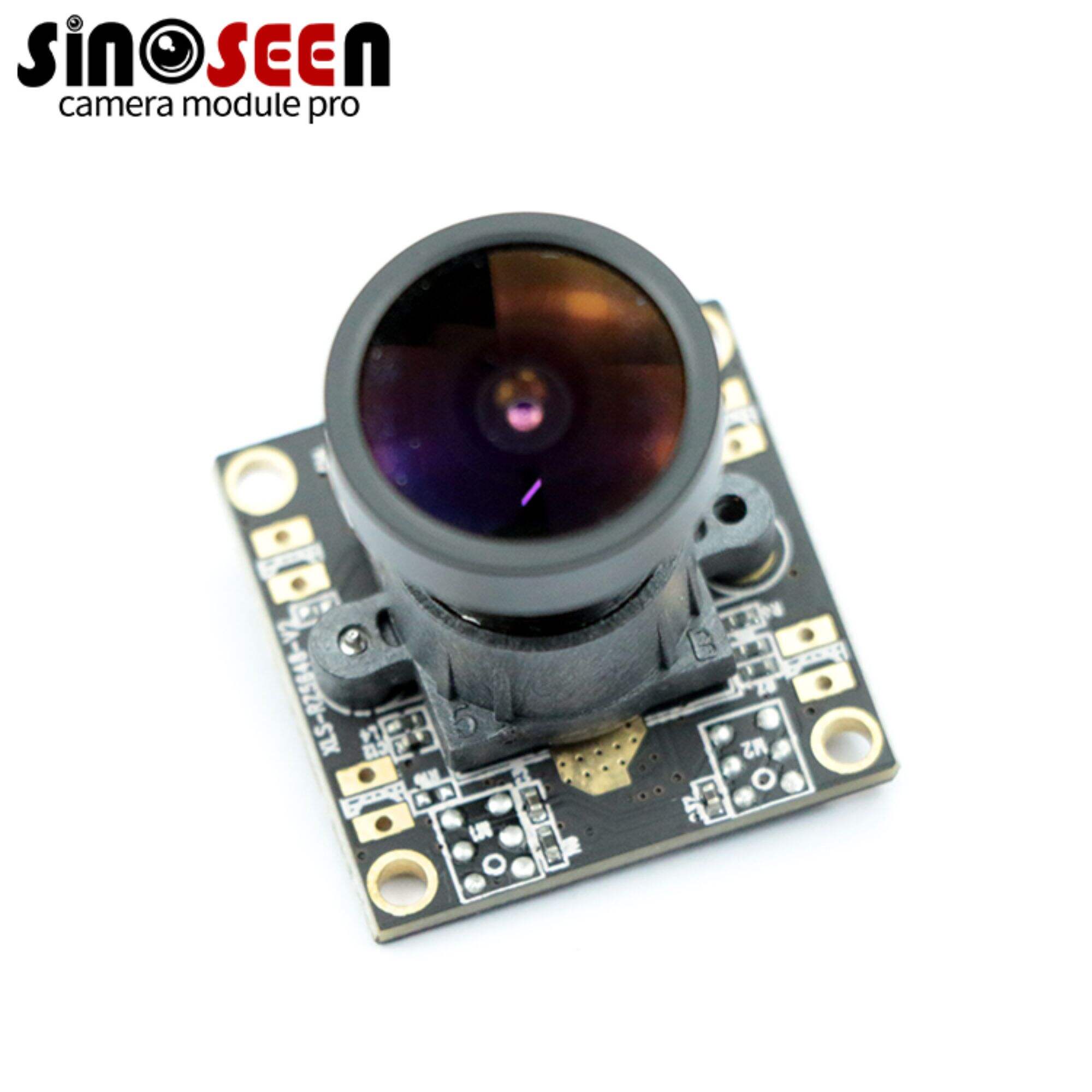
The esp32 with camera represents a revolutionary microcontroller solution that combines powerful processing capabilities with integrated image capture functionality. This versatile development board features the ESP32 system-on-chip alongside a compatible camera module, creating an all-in-one platform for Internet of Things projects requiring visual data collection and processing. The esp32 with camera module operates on a dual-core processor running at frequencies up to 240MHz, providing sufficient computational power for real-time image processing and wireless communication tasks. The integrated WiFi and Bluetooth connectivity enables seamless data transmission and remote monitoring capabilities, making it ideal for smart home automation, security surveillance, and industrial monitoring applications. The camera sensor typically offers resolutions ranging from VGA to 2MP, supporting various image formats including JPEG compression for efficient storage and transmission. Power consumption remains optimized through advanced sleep modes and dynamic frequency scaling, ensuring extended battery life in portable applications. The esp32 with camera supports multiple programming environments including Arduino IDE, ESP-IDF, and MicroPython, accommodating developers with different skill levels and preferences. Memory specifications include up to 520KB of SRAM and 4MB of flash storage, providing adequate space for firmware, image buffers, and application data. The GPIO pins offer extensive interfacing options for sensors, actuators, and display modules, enabling comprehensive project integration. Built-in analog-to-digital converters, pulse-width modulation outputs, and communication protocols such as SPI, I2C, and UART enhance the esp32 with camera versatility for complex embedded applications requiring both visual intelligence and peripheral control functionality.

New Product Releases

The esp32 with camera delivers exceptional value through its cost-effective design that eliminates the need for separate microcontroller and camera modules, significantly reducing project complexity and component costs. This integrated approach streamlines development workflows by providing a single, unified platform that handles both image capture and data processing tasks efficiently. Developers benefit from reduced wiring complexity and improved system reliability since fewer interconnections mean fewer potential failure points. The esp32 with camera offers superior wireless connectivity options, supporting both 2.4GHz WiFi and Bluetooth protocols simultaneously, enabling flexible communication strategies for different application requirements. This dual connectivity allows projects to maintain local Bluetooth connections for configuration while transmitting captured images over WiFi networks to cloud services or remote monitoring stations. Power efficiency stands as a major advantage, with the esp32 with camera consuming minimal energy during operation and offering deep sleep modes that extend battery life in remote sensing applications. The integrated design optimizes power distribution between the processor and camera sensor, resulting in lower overall system consumption compared to discrete component solutions. Programming flexibility represents another significant benefit, as the esp32 with camera supports multiple development environments and programming languages, accommodating both beginners using Arduino IDE and advanced developers utilizing ESP-IDF for low-level optimization. Real-time image processing capabilities enable on-device analysis and filtering, reducing bandwidth requirements and improving response times for time-critical applications. The esp32 with camera provides extensive peripheral support through numerous GPIO pins, enabling integration with sensors, displays, and actuators for comprehensive IoT solutions. Hardware acceleration features include dedicated cryptographic engines and floating-point units that enhance security implementations and mathematical computations required for image processing algorithms. Community support and documentation abundance ensure rapid problem resolution and project development acceleration, while the open-source ecosystem provides extensive libraries and example projects that demonstrate practical implementation strategies for various application domains.

Tips And Tricks

 How to Select the Right AI Camera Module for Facial Recognition Systems?

02

Mar

How to Select the Right AI Camera Module for Facial Recognition Systems?

Selecting the appropriate AI camera module for facial recognition systems represents a critical decision that directly impacts system performance, accuracy, and overall operational efficiency. Modern facial recognition applications demand sophisticat...
View More
How to Optimize Low-Light Performance in Custom Camera Module Designs?

02

Mar

How to Optimize Low-Light Performance in Custom Camera Module Designs?

Custom camera module designs face unique challenges when operating in environments with minimal illumination, making low-light performance optimization a critical engineering consideration. Modern applications ranging from security surveillance to au...
View More
How to Integrate a Small Camera Module into Compact Medical Devices?

02

Mar

How to Integrate a Small Camera Module into Compact Medical Devices?

Medical device miniaturization continues to revolutionize healthcare, enabling less invasive procedures and improved patient outcomes. When designing compact medical equipment, integrating a small camera module requires careful consideration of space...
View More
Why do Robotics Manufacturers Prefer High-Speed AI Camera Modules?

02

Mar

Why do Robotics Manufacturers Prefer High-Speed AI Camera Modules?

The robotics industry has experienced unprecedented growth in recent years, with manufacturers increasingly demanding sophisticated vision systems that can process visual data at lightning speed. High-speed AI camera modules have emerged as the corne...
View More

Get In Touch

esp32 with camera

Seamless WiFi Connectivity and Remote Monitoring Capabilities

Seamless WiFi Connectivity and Remote Monitoring Capabilities

The esp32 with camera excels in wireless communication through its robust WiFi implementation, supporting IEEE 802.11 b/g/n standards with transmission rates up to 150 Mbps. This wireless capability transforms the esp32 with camera into a powerful remote monitoring solution that can stream live video feeds, transmit captured images, and receive control commands from anywhere with internet connectivity. The integrated WiFi module operates on the 2.4GHz frequency band, providing excellent penetration through walls and obstacles while maintaining stable connections over considerable distances. Security protocols including WPA2/WPA3 encryption ensure data protection during transmission, making the esp32 with camera suitable for sensitive surveillance and monitoring applications. The wireless functionality enables real-time image streaming to web browsers, mobile applications, and cloud storage services, allowing users to monitor remote locations instantly. Power management features automatically adjust transmission power based on signal strength requirements, optimizing battery life while maintaining reliable connectivity. The esp32 with camera supports both station and access point modes, enabling flexible network configurations where the device can connect to existing networks or create its own hotspot for direct communication with mobile devices. Advanced features like WiFi Direct and mesh networking capabilities allow multiple esp32 with camera units to collaborate in distributed sensing networks, sharing computational loads and providing redundant coverage for critical monitoring areas. The wireless interface supports over-the-air firmware updates, enabling remote maintenance and feature enhancements without physical access to deployed devices. Integration with popular IoT platforms such as AWS IoT, Google Cloud IoT, and Azure IoT Hub provides scalable cloud connectivity options for enterprise applications requiring centralized data management and analytics processing of captured visual data.
High-Performance Dual-Core Processing Architecture

High-Performance Dual-Core Processing Architecture

The esp32 with camera incorporates a sophisticated dual-core Tensilica Xtensa LX6 processor architecture that delivers exceptional computational performance for embedded vision applications. Operating at frequencies up to 240MHz per core, this processing power enables real-time image analysis, object detection, and pattern recognition directly on the device without requiring external processing resources. The dual-core design allows the esp32 with camera to efficiently multitask, dedicating one core to image capture and preprocessing while the second core handles wireless communication, user interface, and application logic simultaneously. This parallel processing capability ensures smooth operation even during intensive computational tasks, preventing frame drops and maintaining consistent system responsiveness. The esp32 with camera benefits from Harvard architecture implementation with separate instruction and data buses, maximizing memory access efficiency and reducing processing bottlenecks during complex image manipulation operations. Floating-point unit integration accelerates mathematical computations required for advanced image processing algorithms, including edge detection, noise reduction, and color space conversions. The processor architecture supports single instruction, multiple data operations that optimize repetitive pixel processing tasks common in computer vision applications. Cache memory subsystems minimize latency when accessing frequently used code segments and data structures, improving overall system performance during real-time image processing scenarios. The esp32 with camera leverages hardware acceleration for cryptographic operations, enabling secure image transmission and storage without compromising processing speed. Dynamic frequency scaling automatically adjusts processor clock speeds based on computational demands, balancing performance requirements with power consumption to extend battery life in portable applications. The dual-core architecture enables sophisticated multithreading implementations where image capture, processing, and transmission occur concurrently, maximizing system throughput and minimizing response latency for time-sensitive monitoring and surveillance applications requiring immediate alerts and notifications.
Comprehensive Development Ecosystem and Programming Flexibility

Comprehensive Development Ecosystem and Programming Flexibility

The esp32 with camera benefits from an exceptionally rich development ecosystem that supports multiple programming languages, frameworks, and development tools, making it accessible to developers with varying experience levels and project requirements. The Arduino IDE compatibility allows beginners to quickly prototype projects using familiar C++ syntax and extensive library support, while advanced developers can utilize the ESP-IDF framework for low-level optimization and custom driver development. MicroPython support enables rapid prototyping and iterative development through its interpreted environment, allowing real-time code modification and testing without compilation delays. The esp32 with camera development environment includes comprehensive debugging tools, including JTAG support and serial monitoring capabilities that facilitate troubleshooting and performance optimization during project development phases. Extensive documentation covers hardware specifications, software APIs, and practical implementation examples that accelerate learning curves and reduce development time significantly. The open-source nature of the esp32 with camera ecosystem ensures continuous community contributions, resulting in regular updates, bug fixes, and feature enhancements that improve platform stability and functionality. Library availability spans computer vision, machine learning, web server implementation, and IoT protocol support, providing developers with pre-built components for complex functionality implementation. Code examples and tutorials demonstrate practical applications ranging from simple image capture to sophisticated AI-powered object recognition systems, offering step-by-step guidance for common development scenarios. The esp32 with camera supports over-the-air programming capabilities, enabling remote firmware updates and configuration changes without physical device access, streamlining maintenance and deployment processes for distributed installations. Integration with popular development platforms including PlatformIO, Visual Studio Code, and Eclipse provides flexible toolchain options that accommodate different workflow preferences. The esp32 with camera community maintains active forums, GitHub repositories, and knowledge bases where developers share solutions, discuss challenges, and collaborate on innovative projects, fostering a collaborative environment that accelerates problem-solving and knowledge sharing across the global developer community.

Related Search

Get in touch