 EN
EN
 AR
AR
 DA
DA
 NL
NL
 FI
FI
 FR
FR
 DE
DE
 EL
EL
 HI
HI
 IT
IT
 JA
JA
 KO
KO
 NO
NO
 PL
PL
 PT
PT
 RO
RO
 RU
RU
 ES
ES
 SV
SV
 TL
TL
 IW
IW
 ID
ID
 SR
SR
 VI
VI
 HU
HU
 TH
TH
 TR
TR
 FA
FA
 MS
MS
 IS
IS
 AZ
AZ
 UR
UR
 BN
BN
 HA
HA
 LO
LO
 MR
MR
 MN
MN
 PA
PA
 MY
MY
 SD
SD

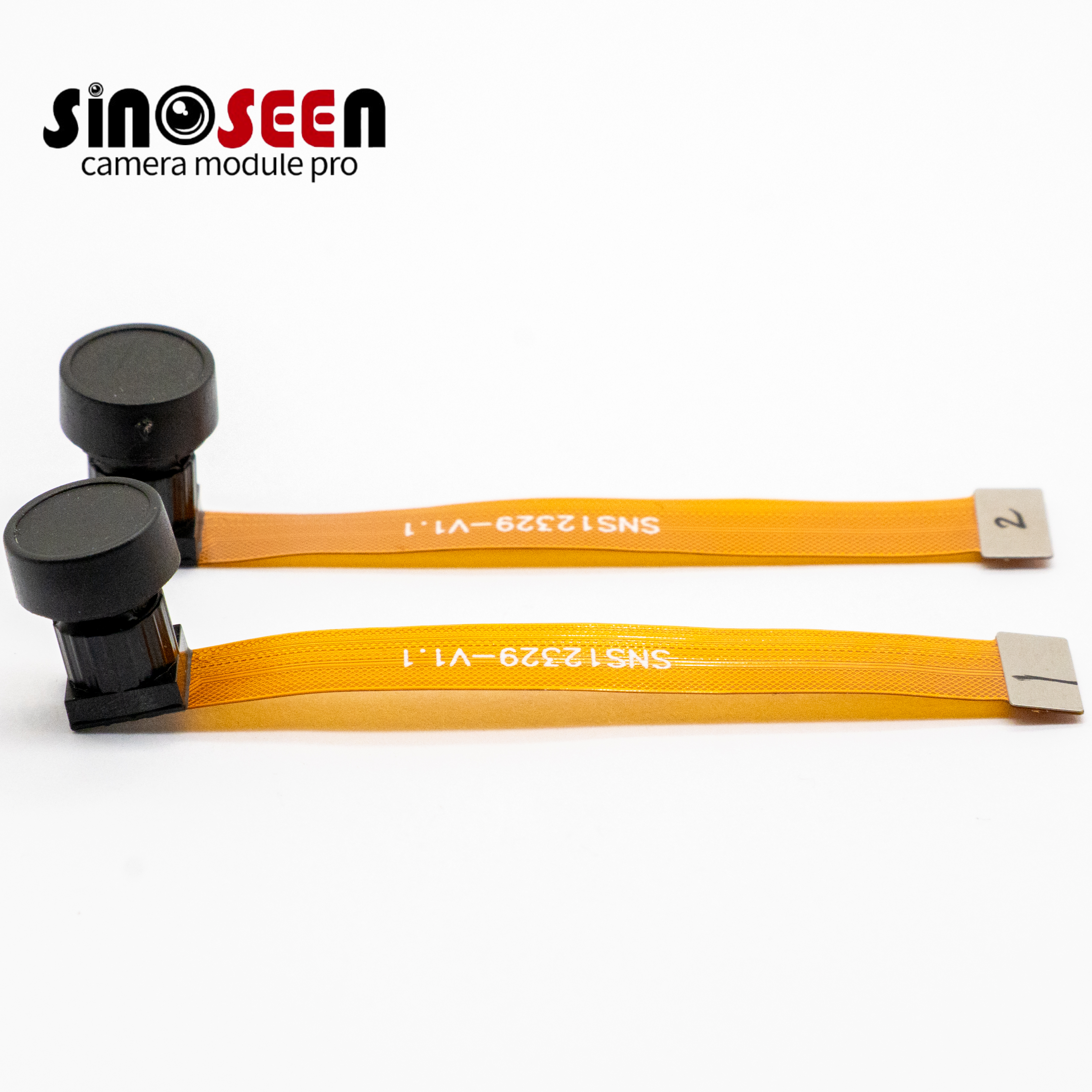
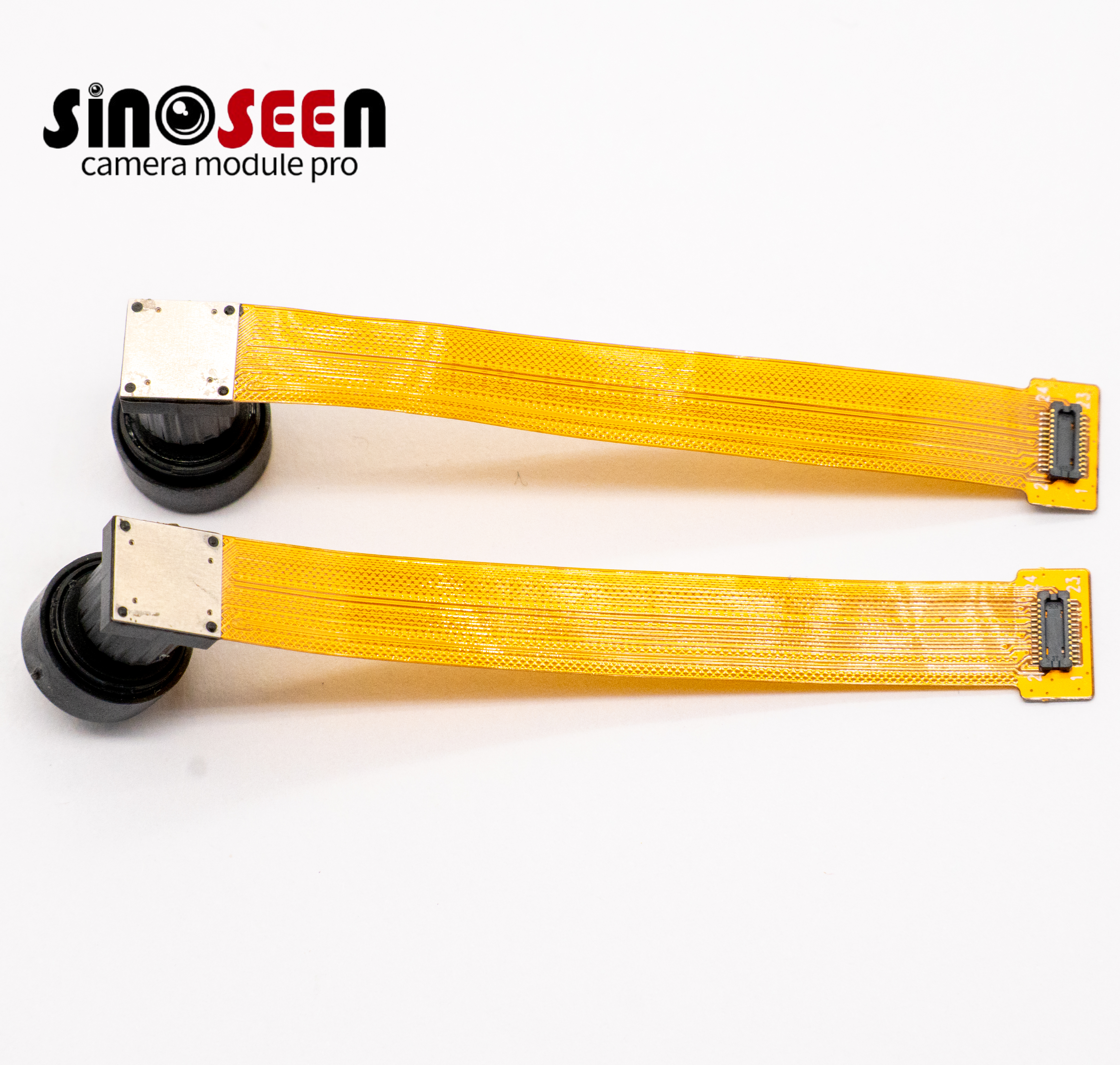
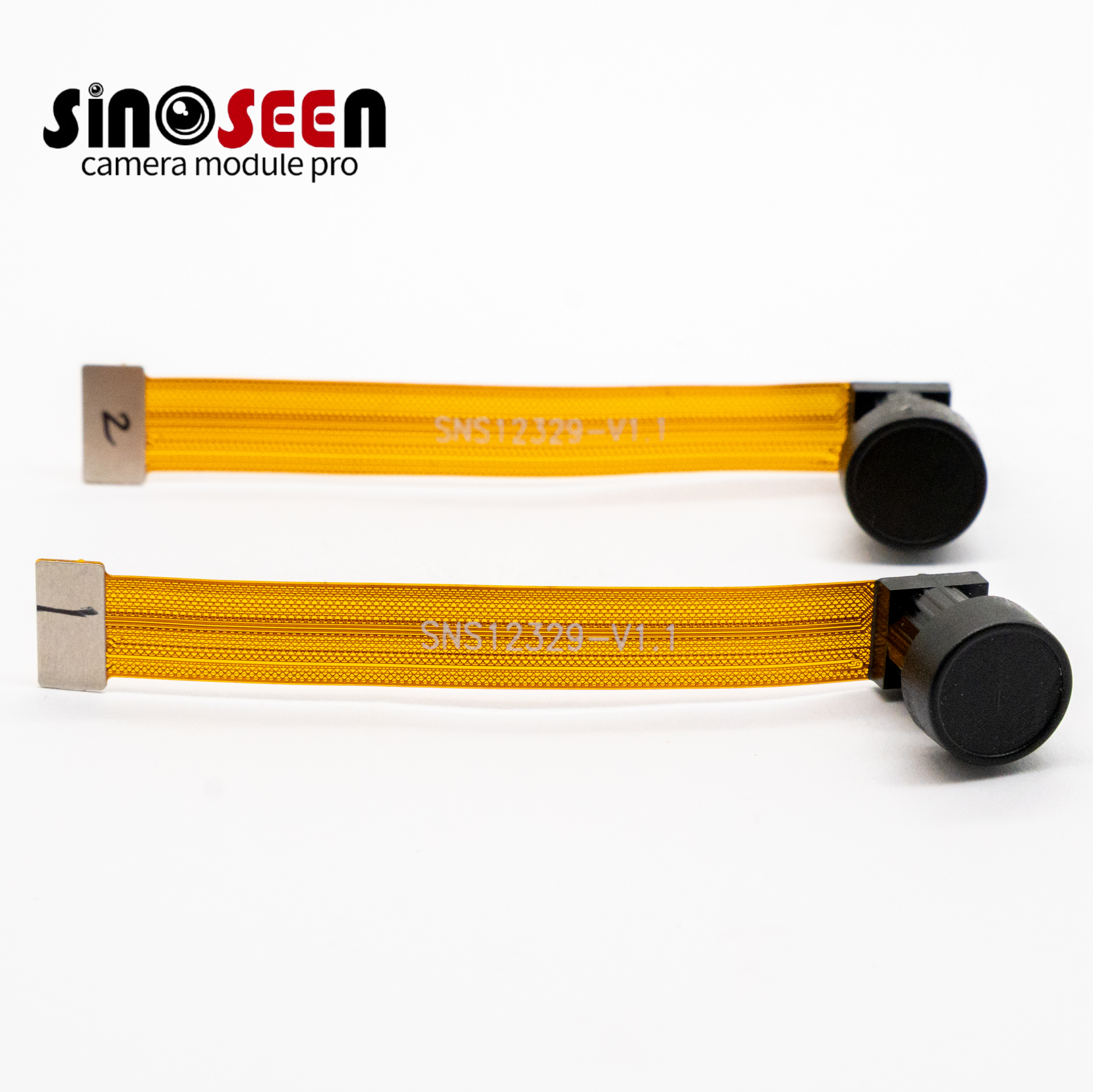
Sinoseen 1MP OV9281 Global Shutter Monochrome Camera Module with MIPI/DVP Interface for Machine Vision
Product Details:
|
Place of Origin: |
Shenzhen,China |
|
Brand Name: |
Sinoseen |
|
Certification: |
RoHS CE/RED FCC ISO |
|
Model Number: |
SNS11595-V1.0 |
Payment & Shipping Terms:
|
Minimum Order Quantity: |
3 |
|
Price: |
negotiable |
|
Packaging Details: |
Tray+Anti-static bag in carton box |
|
Delivery Time: |
2-3weeks |
|
Payment Terms: |
T/T |
|
Supply Ability: |
500000 pieces/month |

- Parameter
- Related products
- Inquiry
Product Description
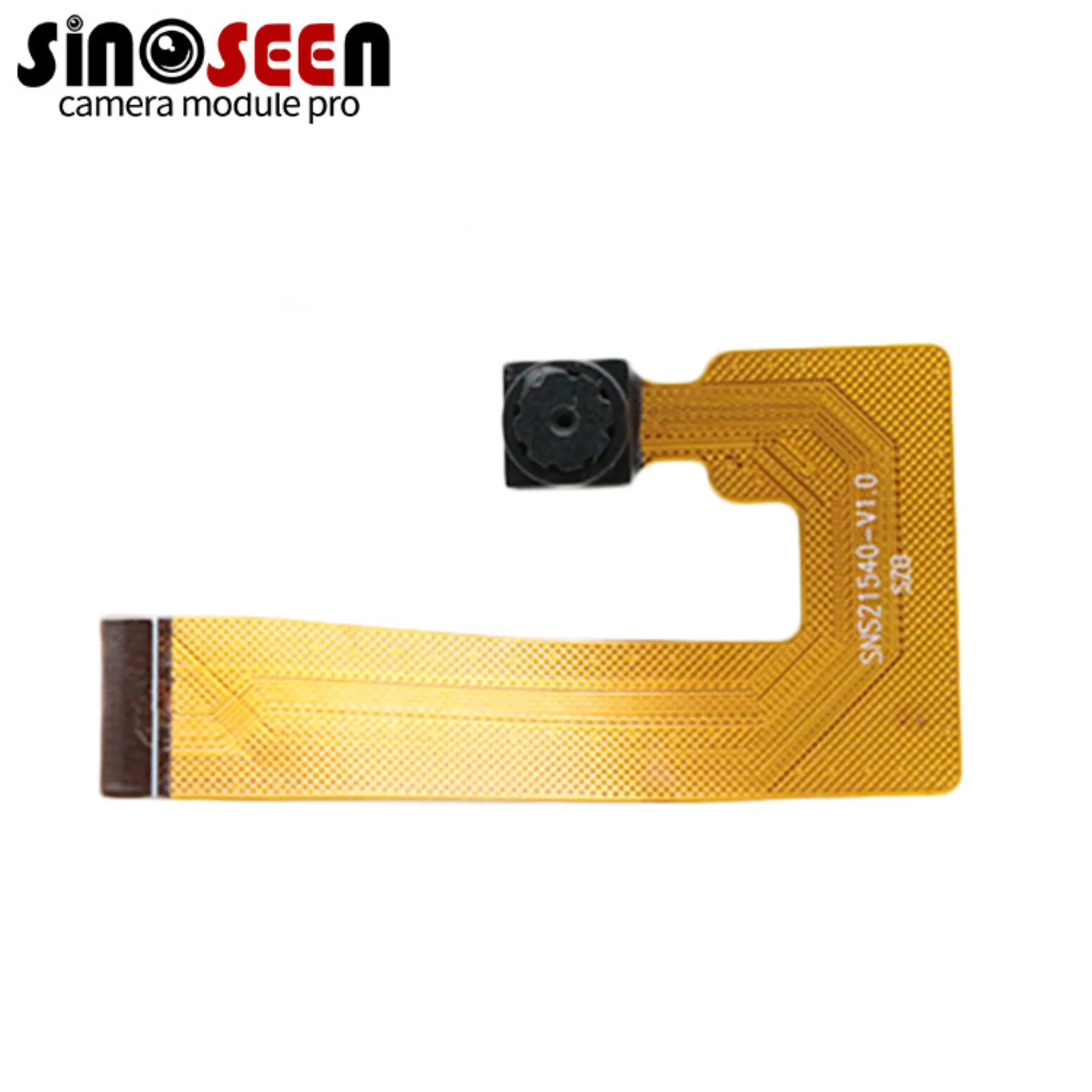
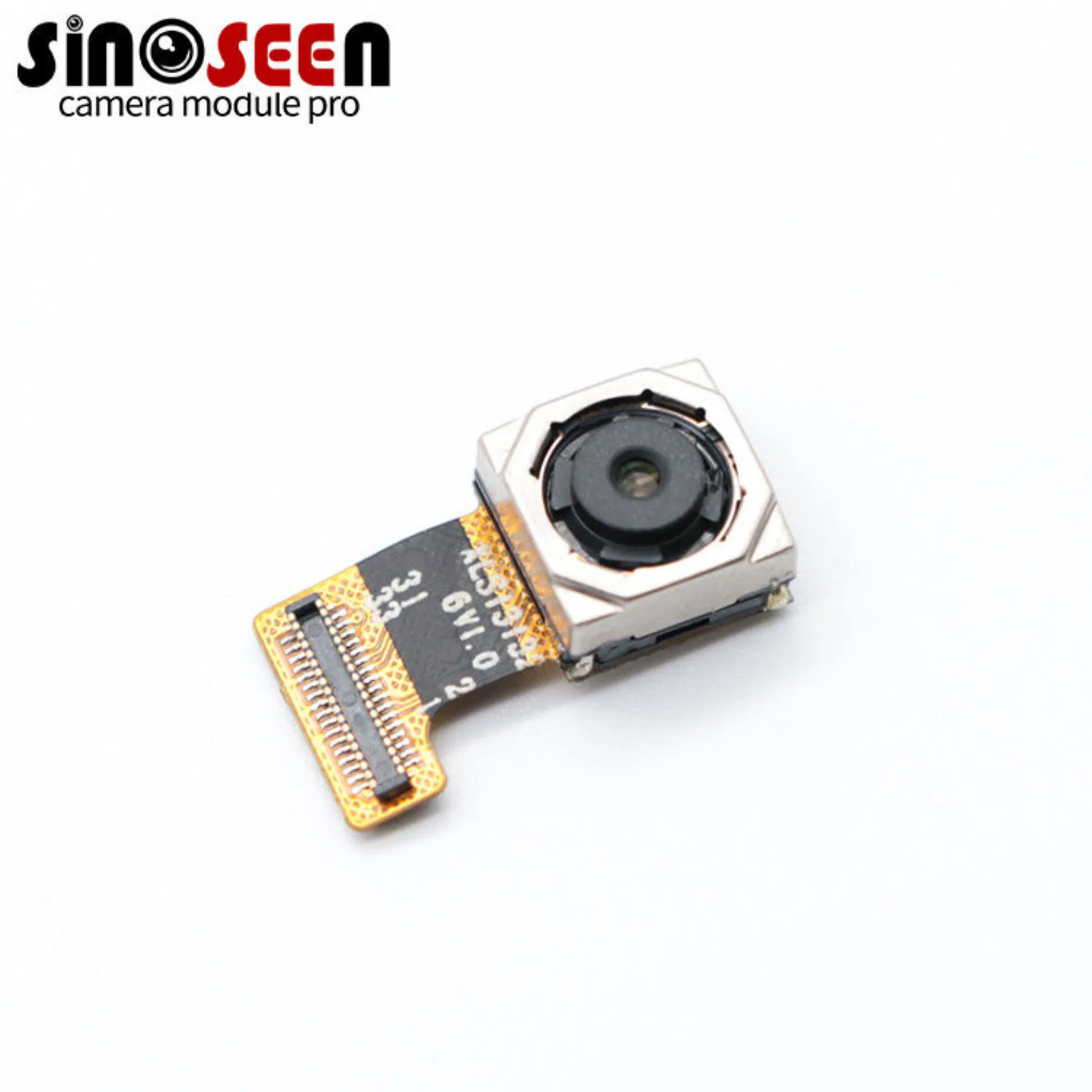
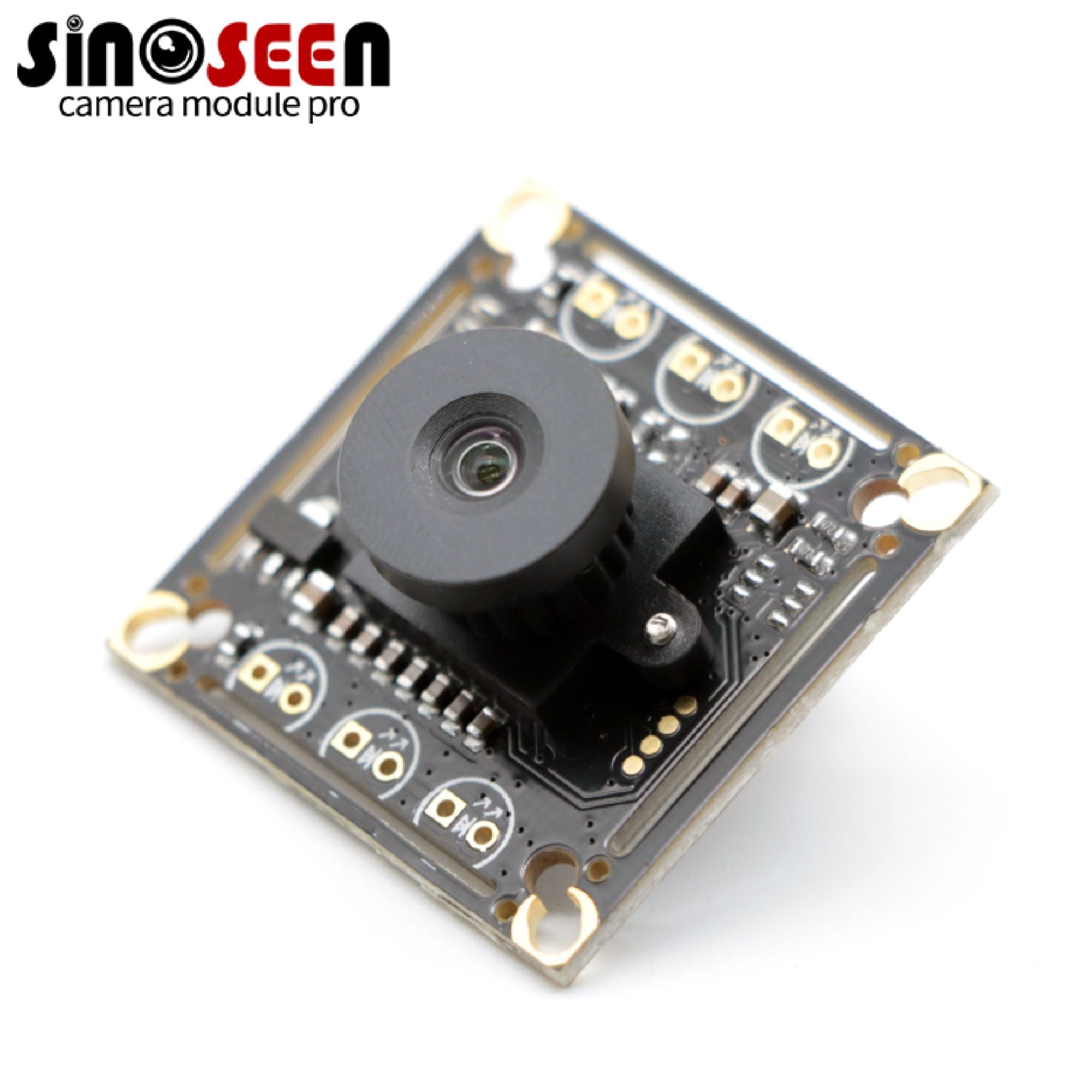
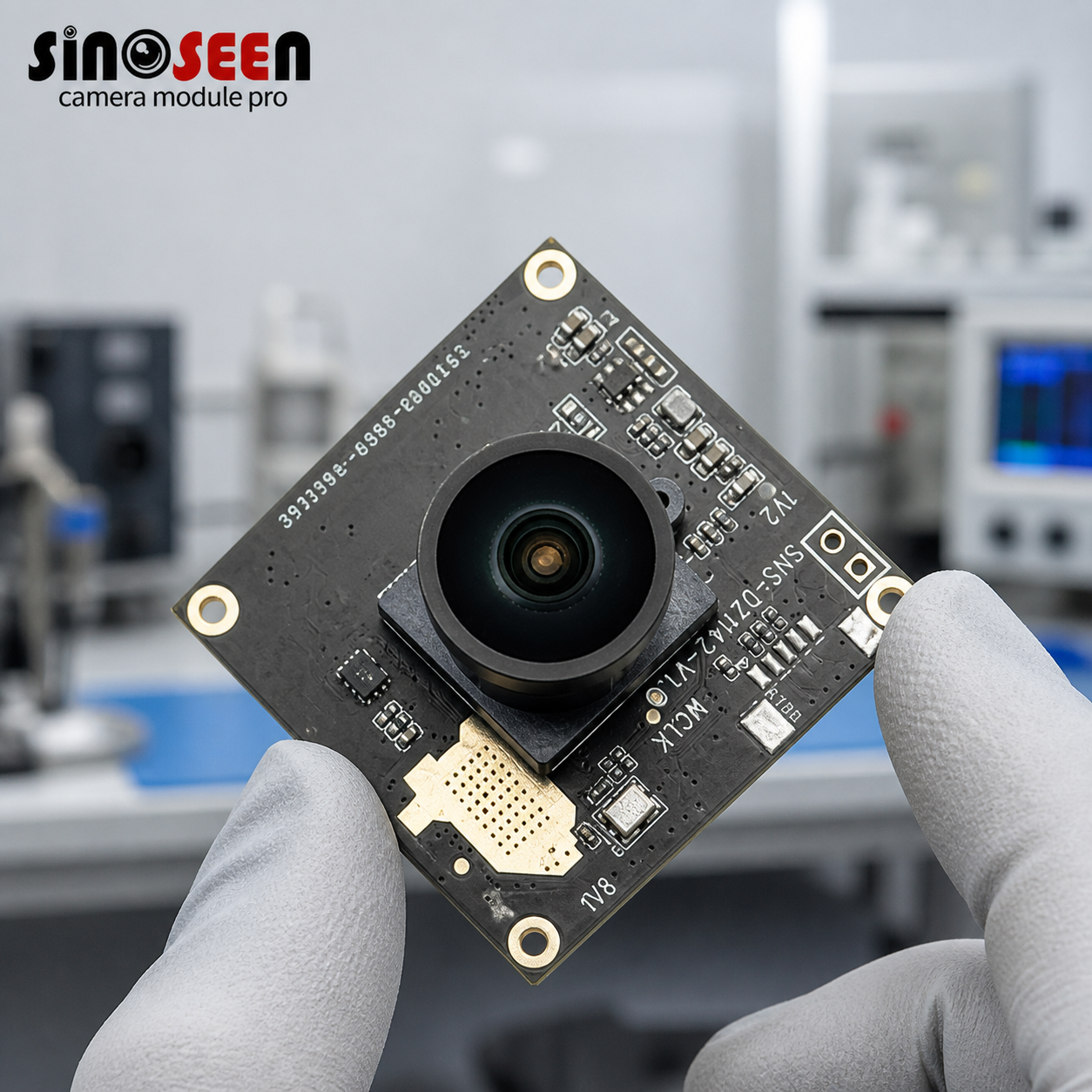
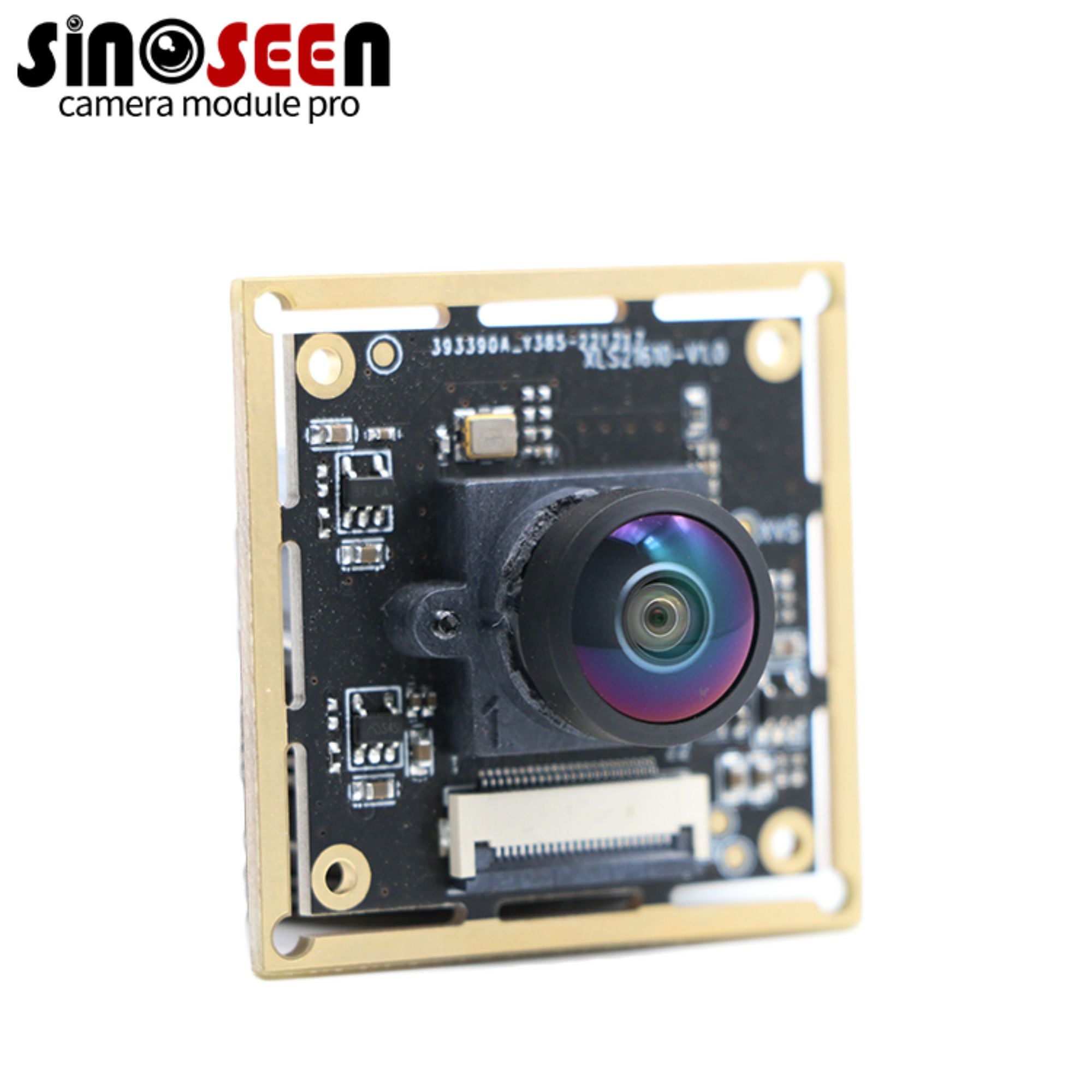
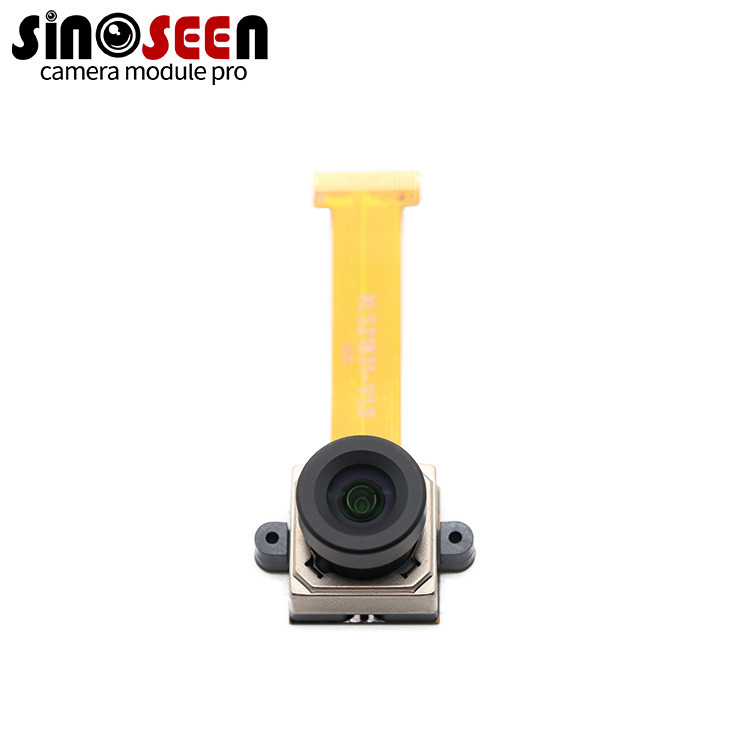
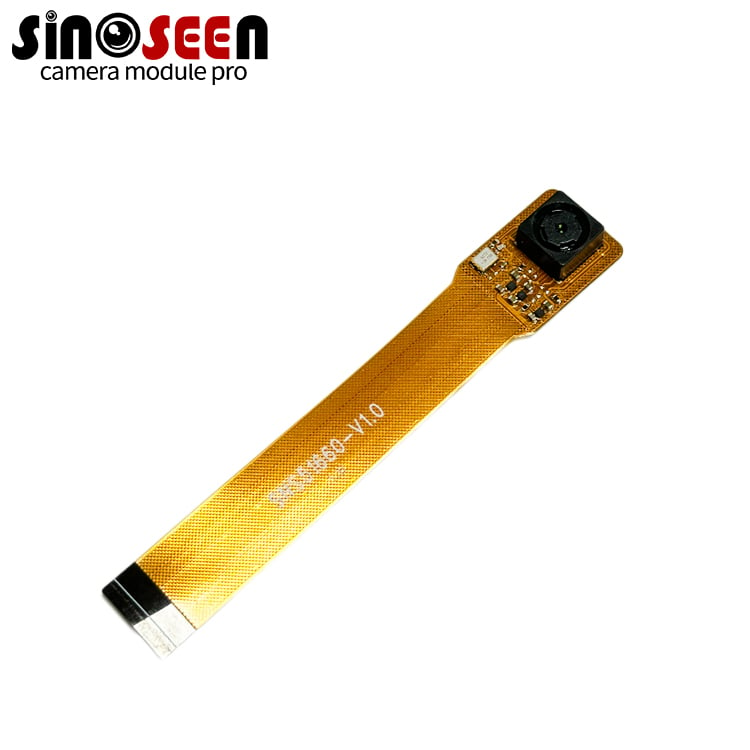
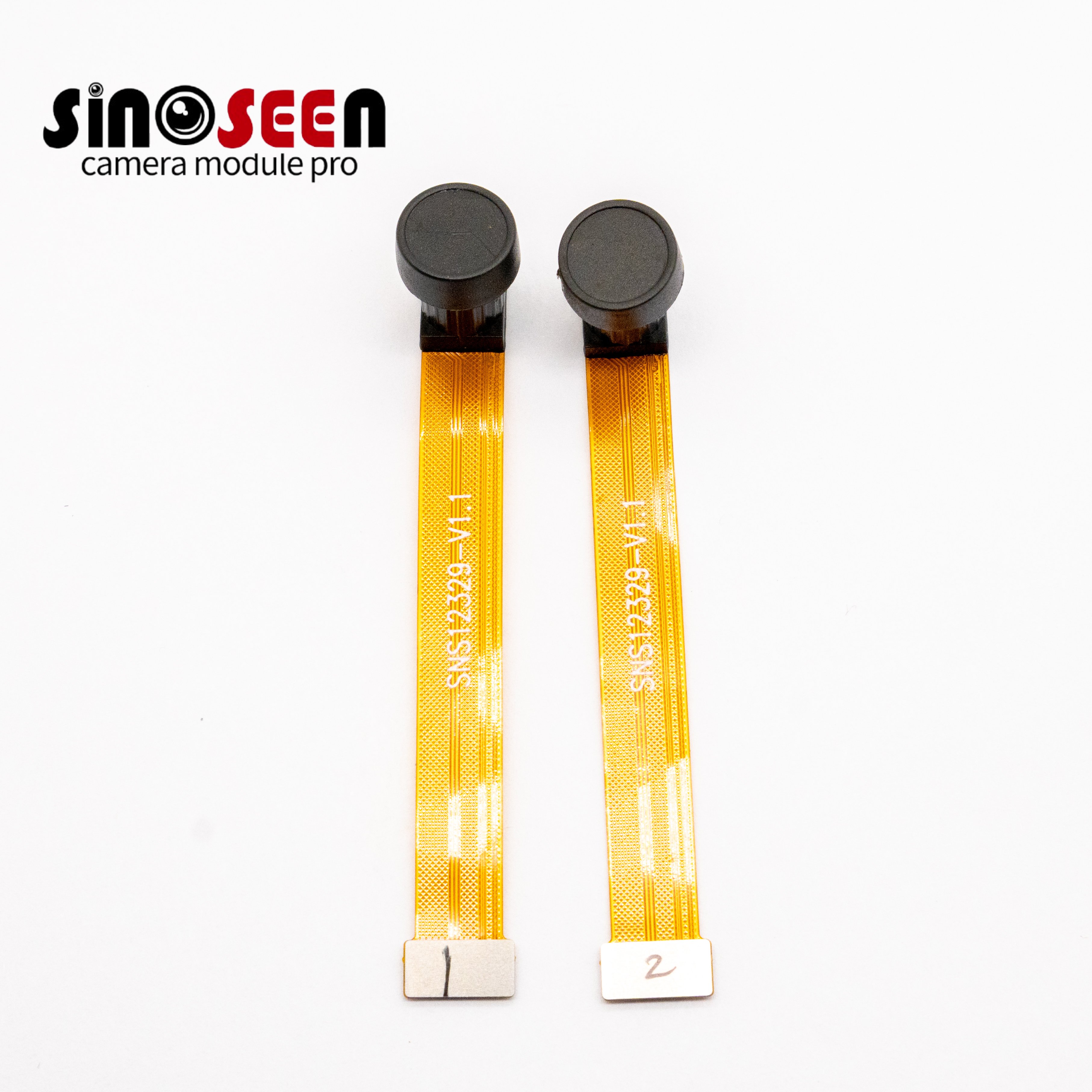
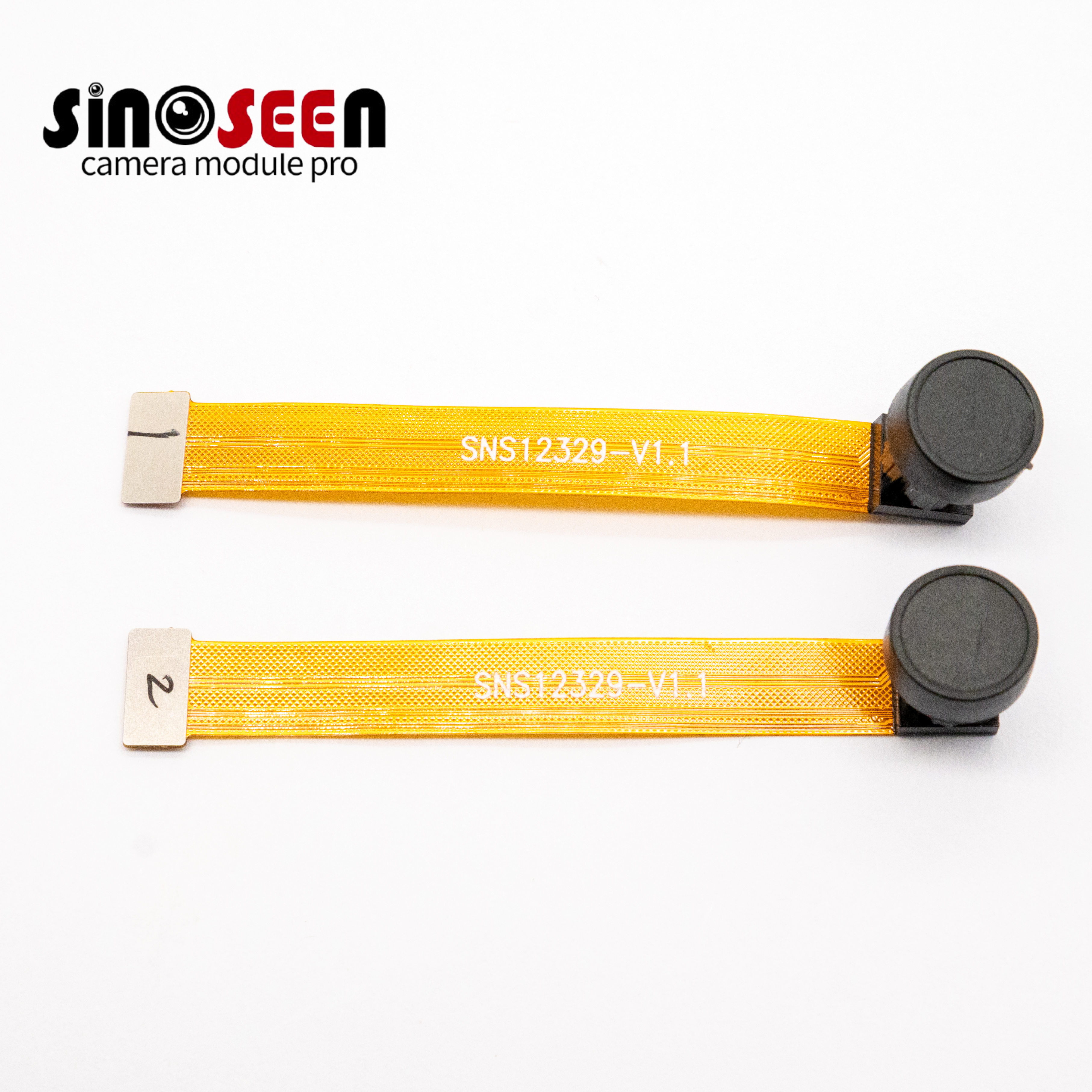
The Sinoseen SNS12329 is a monochrome camera module built around the OV9281 global shutter image sensor. It provides 1280 × 800 imaging in a flexible-circuit assembly for embedded vision integration.
Global shutter capture preserves the geometry of moving subjects by exposing the image simultaneously, avoiding the skew associated with sequential rolling shutter exposure. The OV9281 supports up to 120 fps at 1280 × 800; achievable module performance depends on the selected interface, sensor settings, and host platform.
For machine vision, scanning, and motion analysis projects, Sinoseen can review your optical, mechanical, and interface requirements to determine a suitable sample configuration.
Product Overview & Features
Global Shutter for Moving Subjects
When a camera or target moves during capture, rolling shutter readout can make straight edges appear tilted or objects look stretched. Global shutter exposure avoids this type of temporal distortion, making the module a candidate for moving-part inspection and visual tracking.
Motion blur still depends on exposure time, target speed, and lighting. Short exposure and adequate illumination remain important for sharp images.
Monochrome Imaging for Shape and Contrast
The OV9281 produces monochrome images for tasks that rely on edges, patterns, and brightness differences rather than color. Potential uses include barcode acquisition, component positioning, and image-based measurement.
Applications that need color identification require a different imaging configuration.
High-Frame-Rate Sensor Capability
The sensor supports up to 120 fps at 1280 × 800, providing a basis for projects that need frequent observations of moving targets.
The delivered frame rate must be confirmed on the intended host. Interface bandwidth, exposure settings, driver configuration, and processing throughput all affect sustained capture.
MIPI / DVP Integration
The supplied documentation lists MIPI and DVP interface support. Select and confirm the required interface before ordering, including pin assignments, clocking, power rails, and driver requirements.
This is an embedded camera module, rather than a USB plug-and-play camera. The host must support the selected camera interface and RAW image pipeline.
Flexible-Circuit Assembly
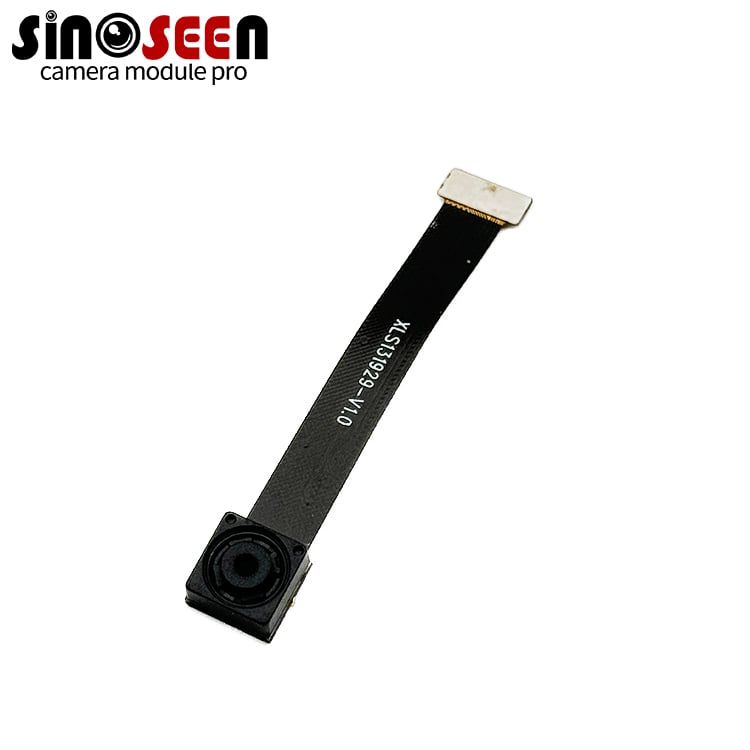
The FPC assembly allows the camera head to be positioned separately from the host connection, which can help accommodate enclosure layouts.
Mechanical integration should account for the camera head, lens projection, connector orientation, and permitted FPC routing. Request the drawing corresponding to the approved production revision before finalizing the enclosure.
Specifications
| Model Series | SNS-12329 |
| Image Sensor | OMNIVISION OV9281 |
| Image Type | Monochrome |
| Shutter Type | Global shutter |
| Sensor Optical Format | 1/4 inch |
| Image Resolution | 1280 × 800 |
| Pixel Size | 3 μm × 3 μm |
| Sensor Frame-Rate Capability | Up to 120 fps at 1280 × 800; module performance requires configuration validation |
| Listed Interfaces | MIPI / DVP; confirm the supplied interface configuration |
| Documented Output Format | 10-bit RAW; confirm the selected mode |
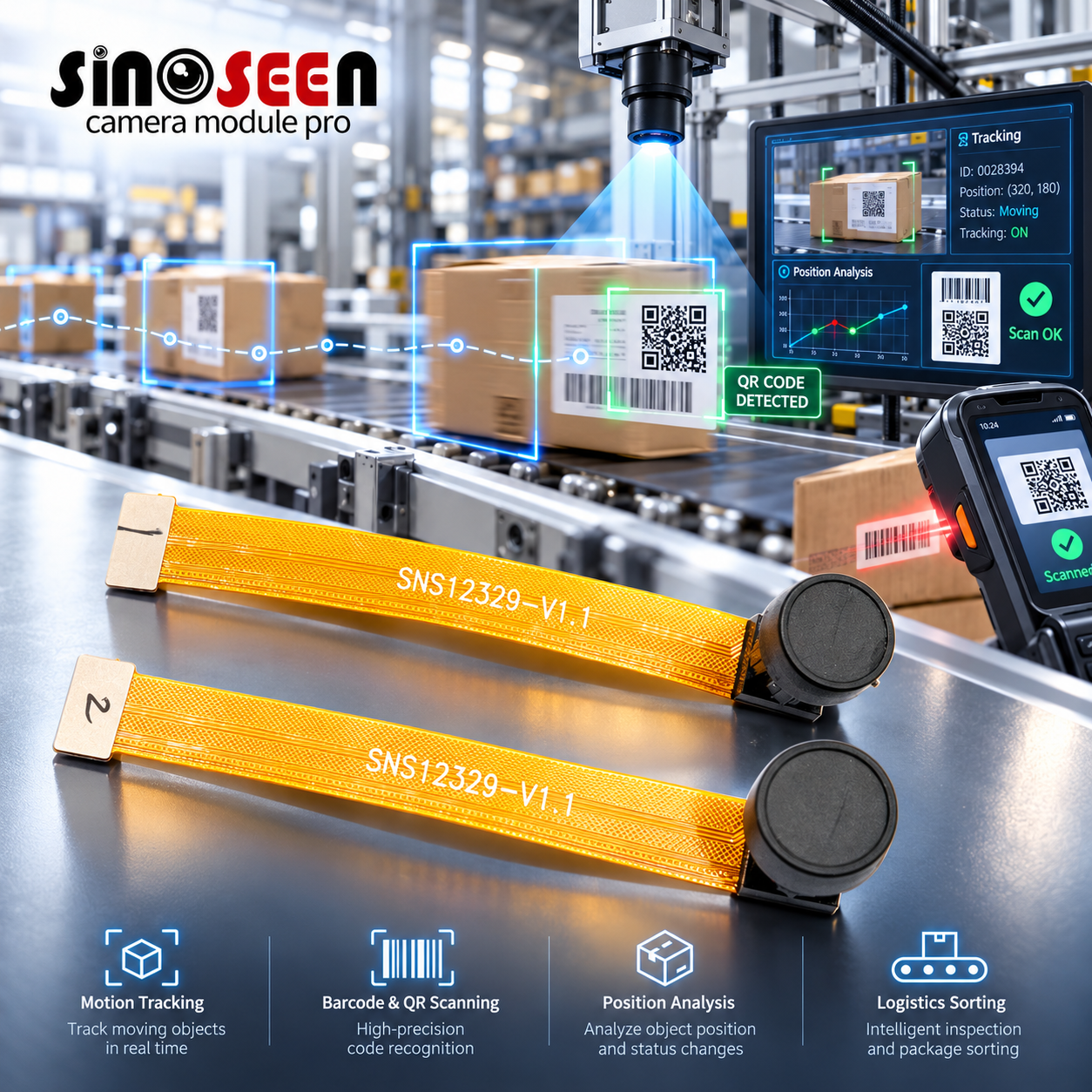
Application Areas
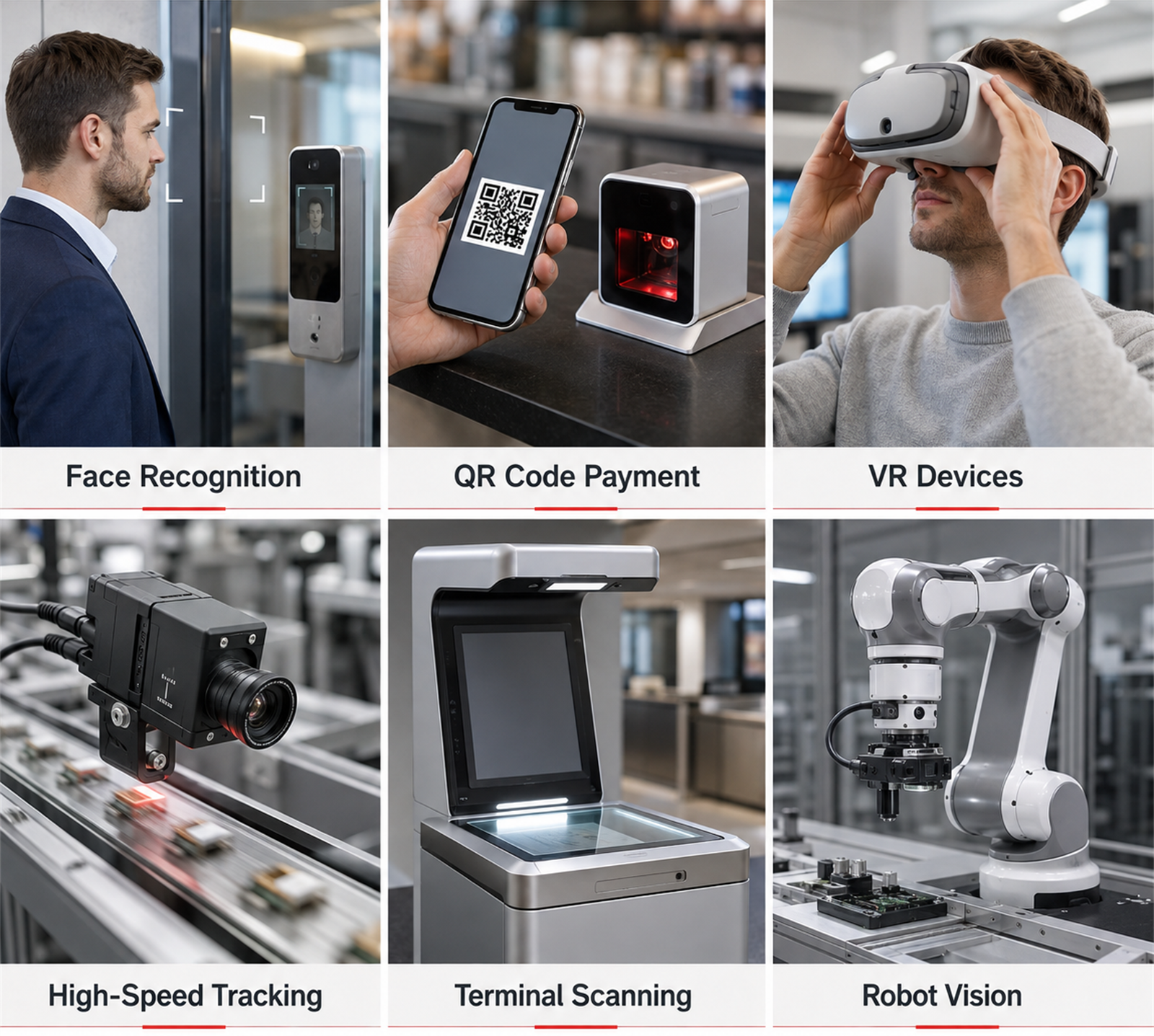
Industrial Inspection: Monochrome image capture for checking part position, outlines, and visible features, with exposure matched to target movement.
Barcode and Terminal Scanning: Image acquisition for host-based decoding, with lens selection based on code size and working distance.
Robot Vision: A candidate for visual positioning and motion observation, subject to host compatibility and timing requirements.
Motion Tracking: Global shutter capture helps preserve moving-object geometry; tracking performance also depends on frame rate, illumination, and software.
OEM/ODM Customization & Development Process
Match the Camera to Your Integration Requirements
A suitable camera configuration must fit both the imaging task and the device structure. Sinoseen provides OEM/ODM camera module services and can assess changes to the optical setup, flexible-circuit layout, connection arrangement, and supported operating configuration.
| Project Requirement | Areas for Engineering Review | Information to Provide |
| The camera does not fit the enclosure | Camera-head placement, FPC outline, and routing | Mechanical drawings and available space |
| cene coverage or working distance is unsuitable | Lens selection, field of view, and focus setting | Target dimensions and capture distance |
| The host connection differs from the standard design | Connector, pin assignment, and interface configuration | Host specifications and connection requirements |
| Moving targets require sharper capture | Exposure, lighting, and supported frame-rate modes | arget speed, sample images, and lighting conditions |
| he project requires infrared imaging | Filter and lens suitability | Illumination wavelength and imaging requirements |
Customization feasibility, development scope, cost, and lead time are confirmed after engineering review.
Customization Process
Step 1 — Share Your Requirements
Provide the application, host platform, required resolution and frame rate, working distance, installation space, and estimated quantity.
Step 2 — Review the Configuration
Assess the sensor operating mode, interface, lens, and mechanical arrangement. Identify any changes required for the target device.
Step 3 — Confirm Drawings and Evaluation Criteria
Agree on the configuration, connection details, mechanical revision, and sample acceptance requirements before prototype production.
Step 4 — Evaluate Samples
Test image quality, sustained frame rate, exposure behavior, host integration, and mechanical fit in the actual operating environment.
Step 5 — Approve the Production Configuration
Confirm the accepted sample, drawings, optical components, and operating configuration before proceeding with volume production.
Send Your Drawings and Imaging Requirements
About Sinoseen
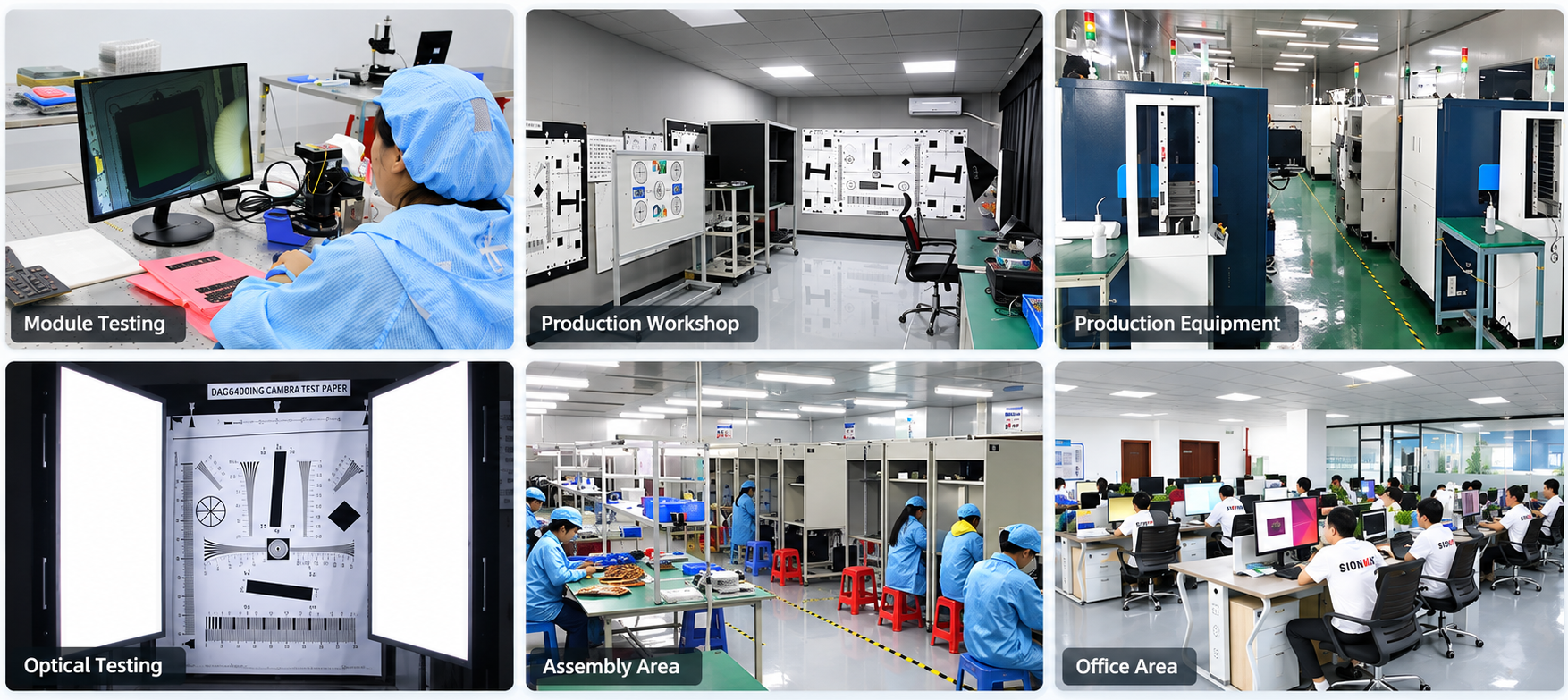
Shenzhen Sinoseen Technology Co., Ltd. was established in June 2016 and specializes in CMOS camera module design, development, manufacturing, and OEM/ODM services.
Its product portfolio includes USB, MIPI, and DVP camera modules, with services extending from development through manufacturing and after-sales support.
For embedded vision projects, Sinoseen works with customers to assess the imaging task alongside mechanical and electrical integration requirements. This helps define a camera configuration that can be evaluated in the intended device before production approval.
Certifications & Intellectual Property
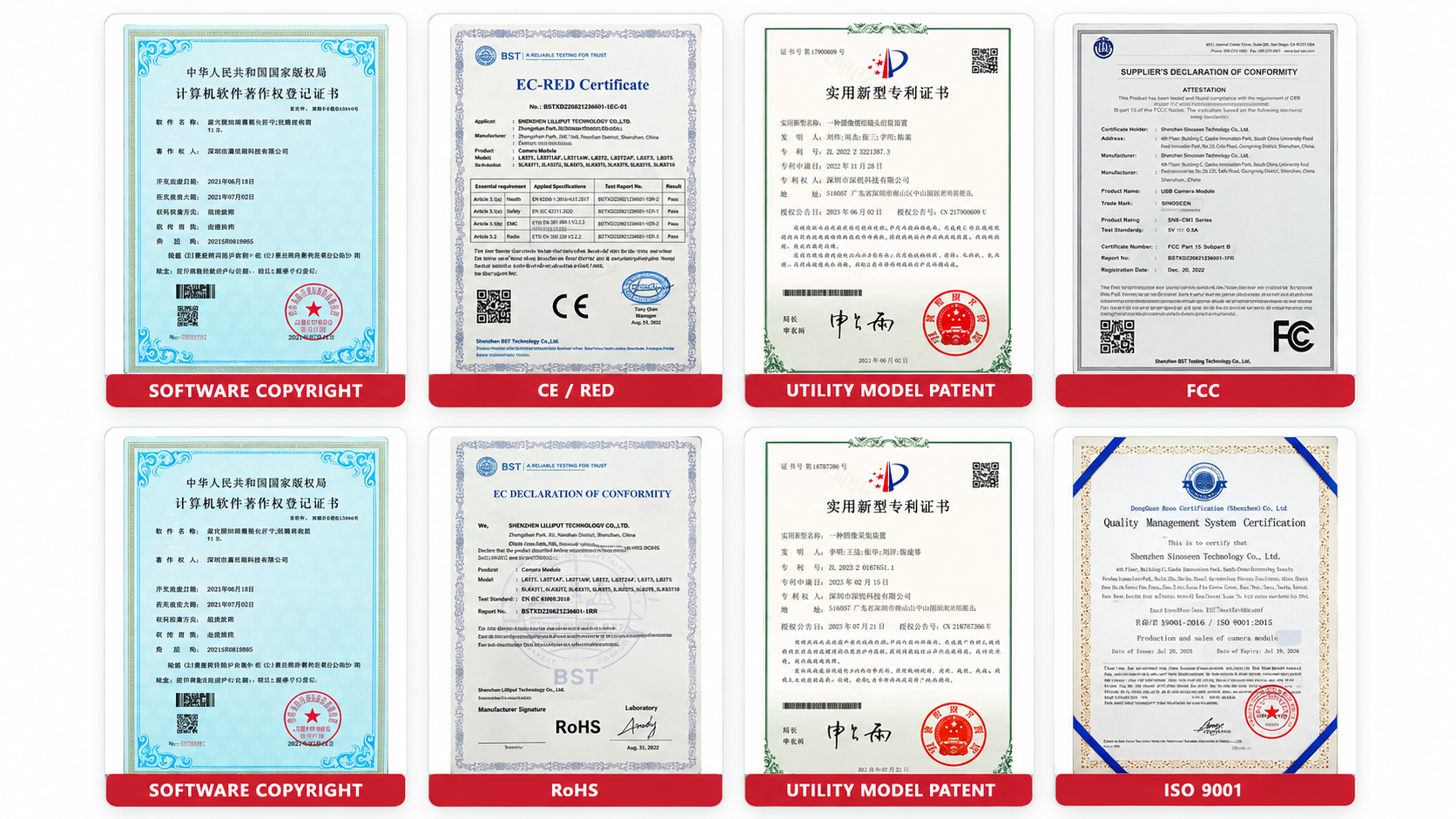
Sinoseen’s documentation includes quality management records, product compliance documents, software copyrights, and utility model patents. For your camera module project, please request the current documents applicable to the selected model and configuration, including relevant CE, FCC, or RoHS documentation.
Frequently Asked Questions
Does this module produce color images?
No. This configuration uses a monochrome OV9281 sensor. It is intended for tasks based on brightness, contrast, shapes, and patterns rather than color information.
Does global shutter eliminate motion blur?
Global shutter avoids the skew caused by different image rows being exposed at different times. Motion blur can still occur if the exposure is too long for the target speed. Lighting and exposure settings must be selected for the application.
Can the module deliver 1280 × 800 at 120 fps?
The OV9281 sensor supports this operating capability. Sustained output from the complete module must be verified with the selected interface, driver, exposure settings, and host platform.
Can I connect it directly to a USB port?
No direct USB interface is specified for this configuration. Integration requires a compatible MIPI or DVP host, appropriate power supplies, and software support. If USB is required, ask Sinoseen to assess a suitable alternative or bridge-based design.
Does the module support infrared imaging?
Infrared suitability depends on the installed optical filter and lens. The supplied specification lists a “650 IR” filter designation, so compatibility with an infrared illumination wavelength should be confirmed before ordering.
Can the lens, FPC, or connector be customized?
These changes can be submitted for engineering review. Provide your enclosure drawings, working distance, required field of view, and host connection details so the scope and feasibility can be assessed.
What is required to request a sample?
Provide the intended application, host platform, selected interface, target frame rate, working distance, and mechanical constraints. Sample configuration, quantity, pricing, and lead time are confirmed for the project.