 EN
 AR
 DA
 NL
 FI
 FR
 DE
 EL
 HI
 IT
 JA
 KO
 NO
 PL
 PT
 RO
 RU
 ES
 SV
 TL
 IW
 ID
 SR
 VI
 HU
 TH
 TR
 FA
 MS
 IS
 AZ
 UR
 BN
 HA
 LO
 MR
 MN
 PA
 MY
 SD

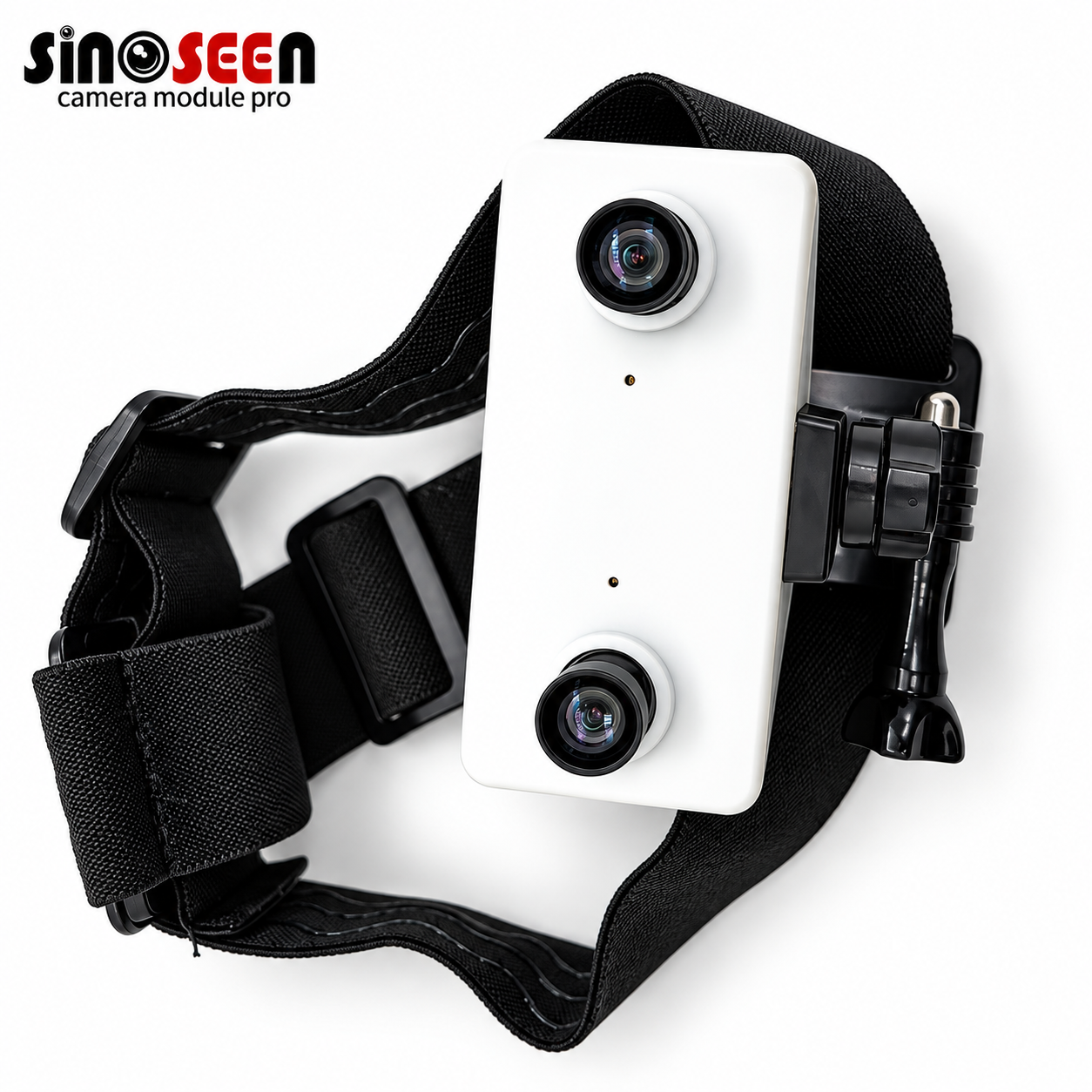
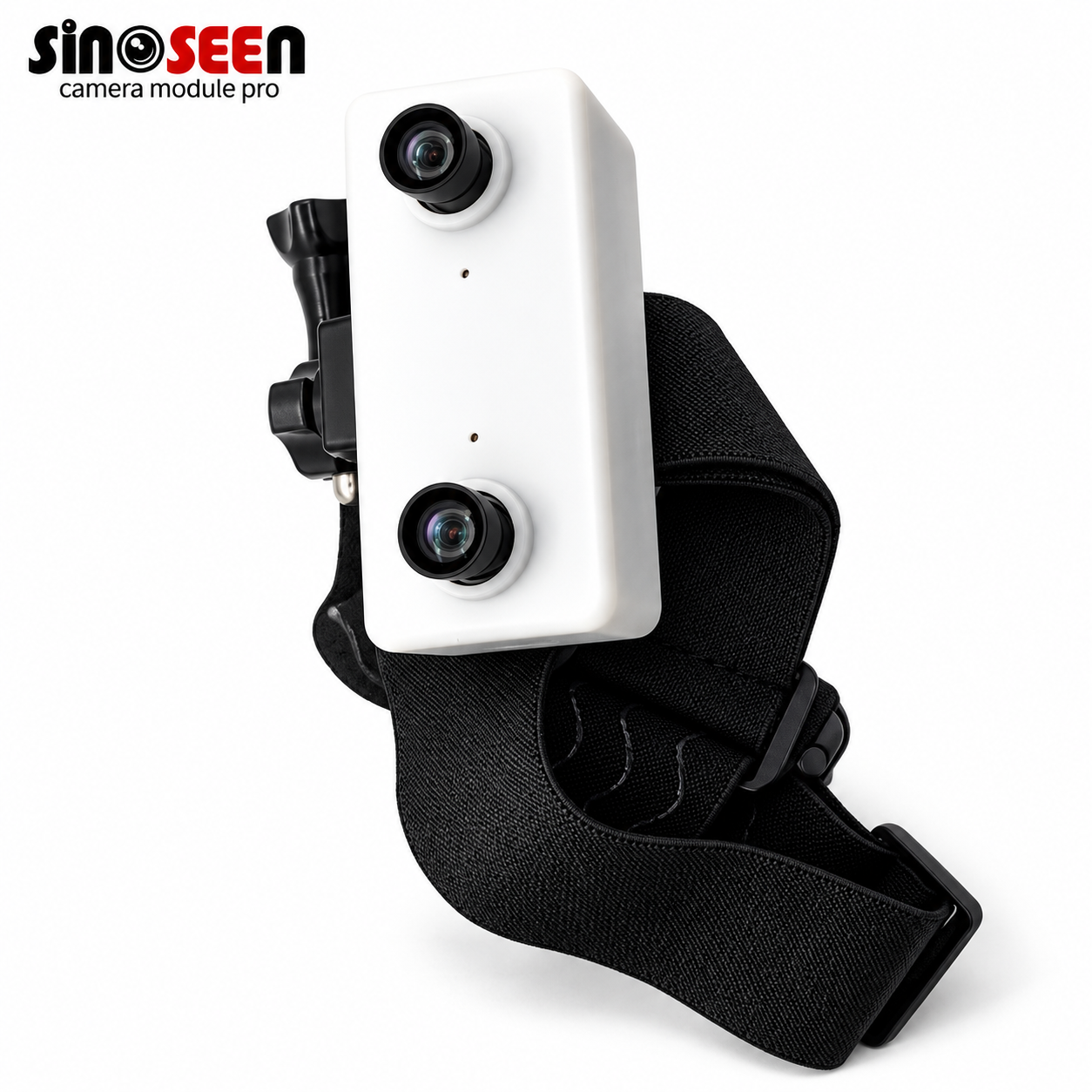
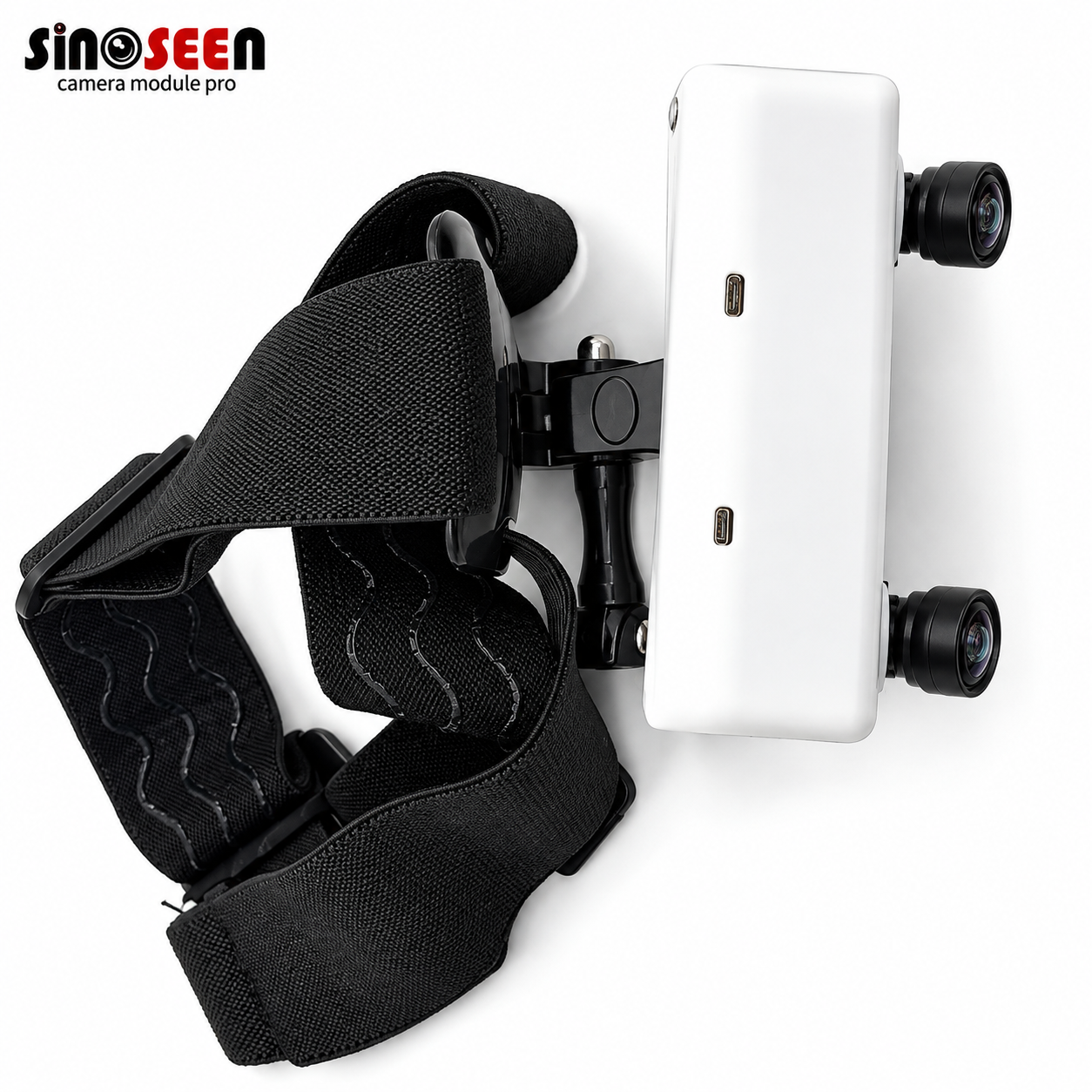
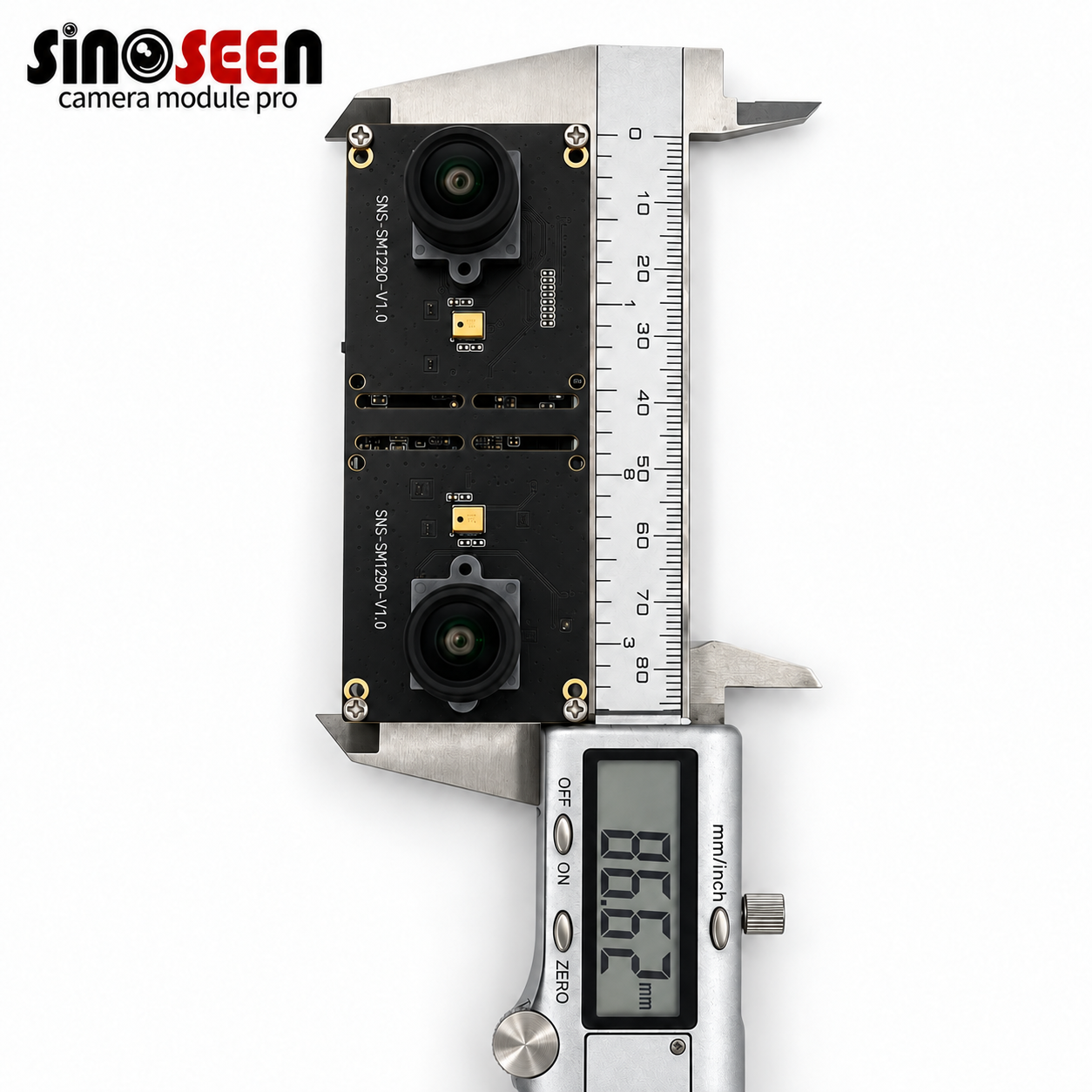
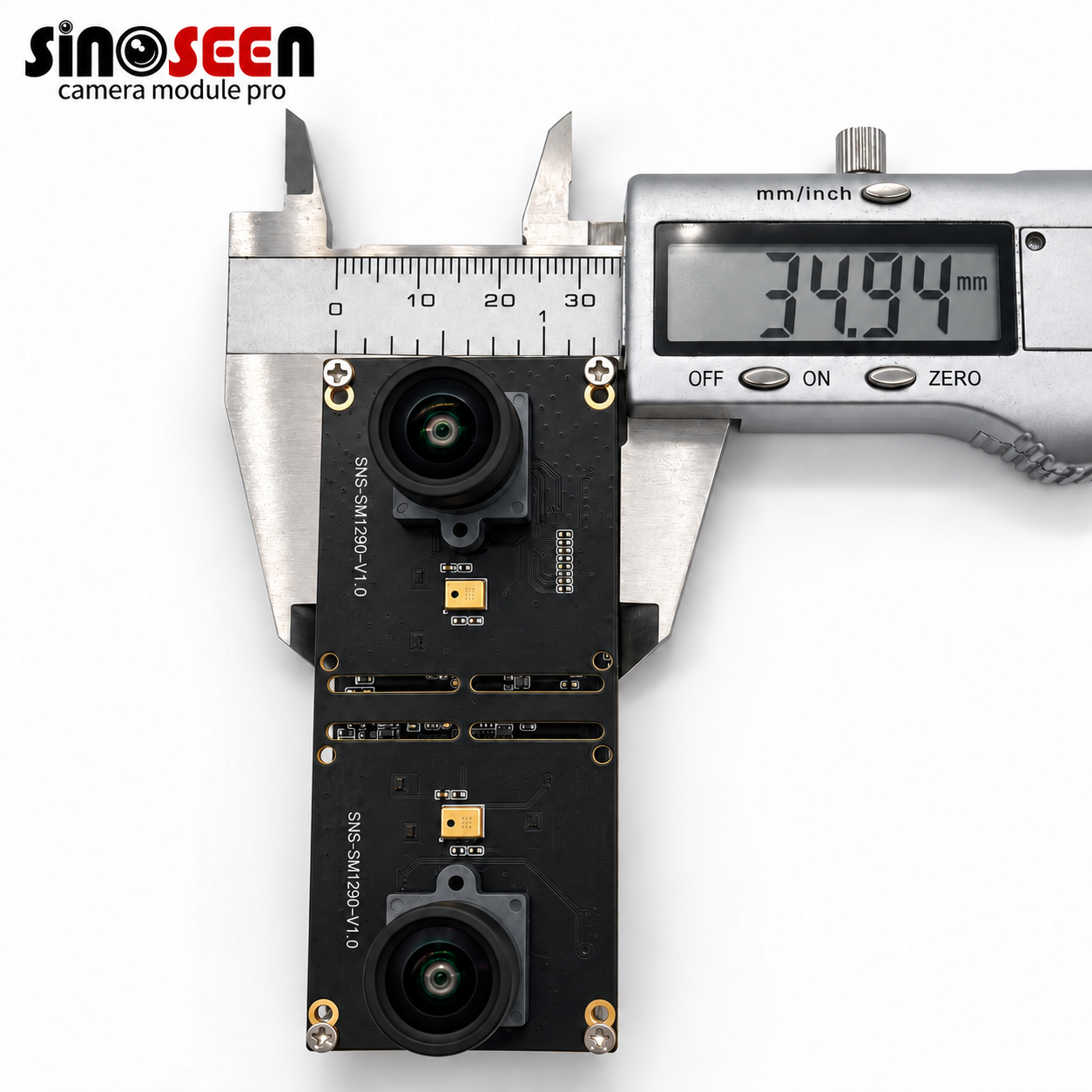
Sinoseen Global Shutter USB 3.0 Dual-Lens Camera with IMU for Robot Training and Motion Data Collection
Product Details:
Place of Origin: |
Shenzhen,China |
Brand Name: |
Sinoseen |
Certification: |
RoHS CE/RED FCC ISO |
Model Number: |
SNS-SM1290-V1.0 |
Payment & Shipping Terms:
Minimum Order Quantity: |
1 |
Price: |
negotiable |
Packaging Details: |
Tray+Anti-static bag in carton box |
Delivery Time: |
2-3weeks |
Payment Terms: |
T/T |
Supply Ability: |
500000 pieces/month |
- Parameter
- Related products
- Inquiry
Product Overview
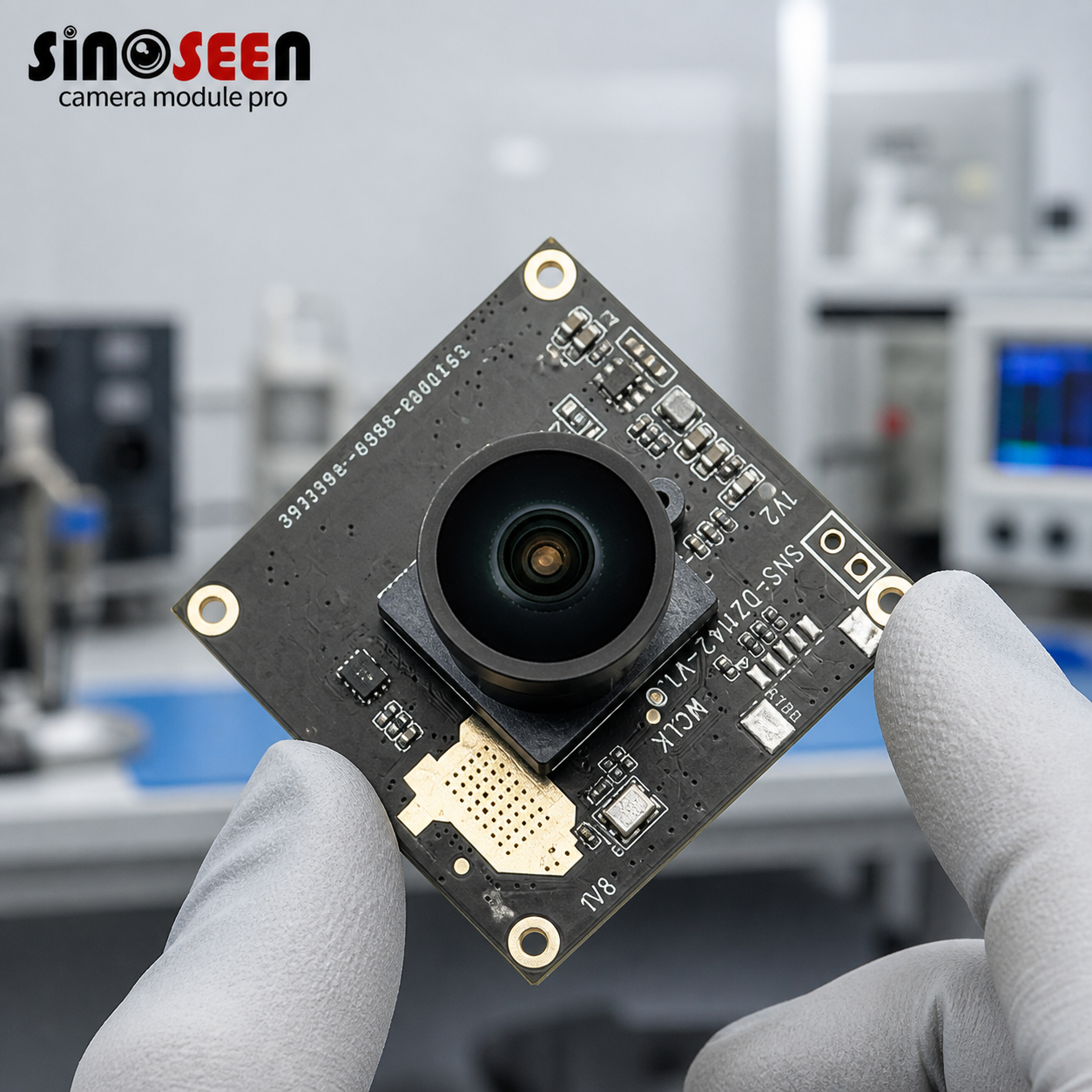
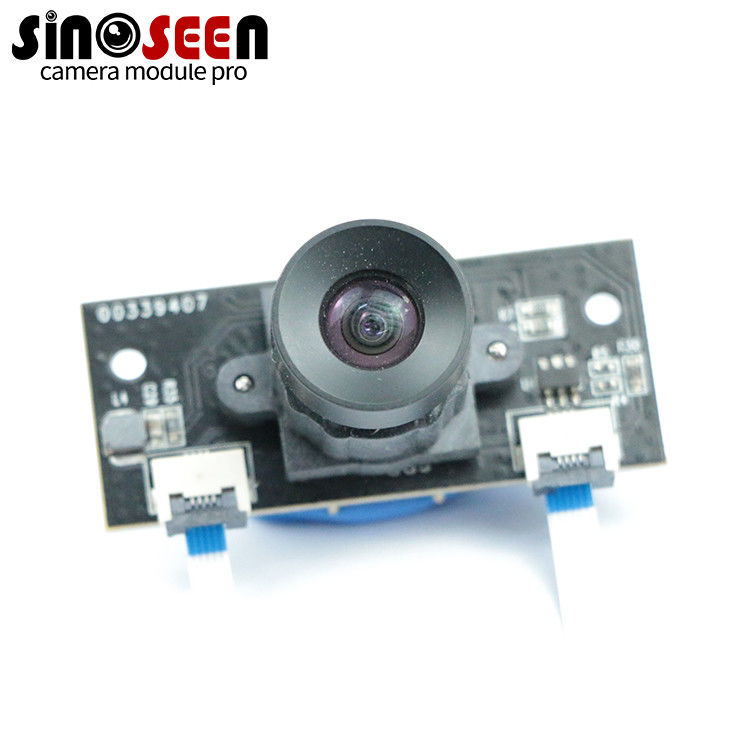
The Sinoseen SNS-SM1290-V1.0 is a dual-lens USB 3.0 camera module built around two onsemi AR0234 global shutter image sensors. Combining wide-angle imaging with an onboard IMU, it provides a hardware foundation for robotics, motion analysis and embedded vision development.
Each sensor features a 1/2.6-inch optical format, 1920 × 1200 active pixels and a 3.0 μm pixel size. Global shutter capture helps reduce the geometric distortion associated with rolling shutter readout when imaging moving objects or operating on a moving platform.
The module supports MJPEG video at up to 60fps and YUY2 video at up to 30fps in the specified output modes. A USB 3.0 Type-C connection carries video and supplies power, while fixed-focus wide-angle lenses provide a specified diagonal field of view of 200°.
Its board-level design allows integration into custom housings and prototype systems. Applications requiring stereo depth, visual-inertial tracking or image rectification need compatible host software and appropriate calibration.
Key Features
Dual AR0234 Global Shutter Sensors
Two AR0234 sensors provide separate optical viewpoints for dual-camera imaging projects. Global shutter exposure helps preserve object geometry during motion, making the module suitable for evaluating moving scenes and dynamic vision applications.
Up to 60fps MJPEG Video
MJPEG output supports frame rates up to 60fps, while YUY2 output supports up to 30fps. Available resolutions and frame rates depend on the selected firmware mode, output format and host configuration.
Wide-Angle Fixed-Focus Optics
The specified lens configuration offers a 200° diagonal field of view, helping capture a broad surrounding scene. The 1.8 mm focal length and F2.0 aperture suit wide-angle imaging designs, with a specified focus range from 60 cm to infinity.
Wide-angle images require lens calibration and correction when used for geometric measurement or stereo processing.
Onboard IMU
The integrated IMU provides a hardware basis for projects that combine visual and inertial sensing. IMU data access, sampling settings and image-to-IMU timing should be confirmed for the intended software platform.
USB 3.0 Type-C Connection
The USB 3.0 Type-C interface simplifies connection to a compatible host. The module operates from a 5 V supply through USB, reducing the need for a separate power connection.
Board-Level Integration
The dual-lens board can be incorporated into a custom enclosure or embedded device. The standard configuration uses M12 × P0.5 lens mounts. Mechanical fit, optical clearance and mounting requirements should be checked against the approved drawing.
Technical Specifications
| Parameter | Specification |
| Model | SNS-SM1290-V1.0 |
| Camera Configuration | Dual-lens, dual-sensor |
| Image Sensors | 2 × onsemi AR0234 |
| Sensor Optical Format | 1/2.6 inch per sensor |
| Active Pixel Array | 1920 × 1200 per sensor |
| Resolution per Sensor | Approximately 2.3MP |
| Pixel Size | 3.0 × 3.0 μm |
| Shutter Type | Global shutter |
| Focus Type | Fixed focus |
| Sensor-Level Data Format | 10-bit RAW Bayer |
| USB Video Formats | MJPEG, YUY2 |
| Maximum Listed Frame Rate | MJPEG: up to 60fps; YUY2: up to 30fps |
| Host Interface | USB 3.0 |
| Connector | USB Type-C |
| IMU | Onboard |
| Supply Voltage | 5 V ±5% |
| Focal Length | 1.8 mm ±5% |
| Specified Field of View | Diagonal: 200°; Horizontal: 181°; Vertical: 114°; stated tolerance ±3° |
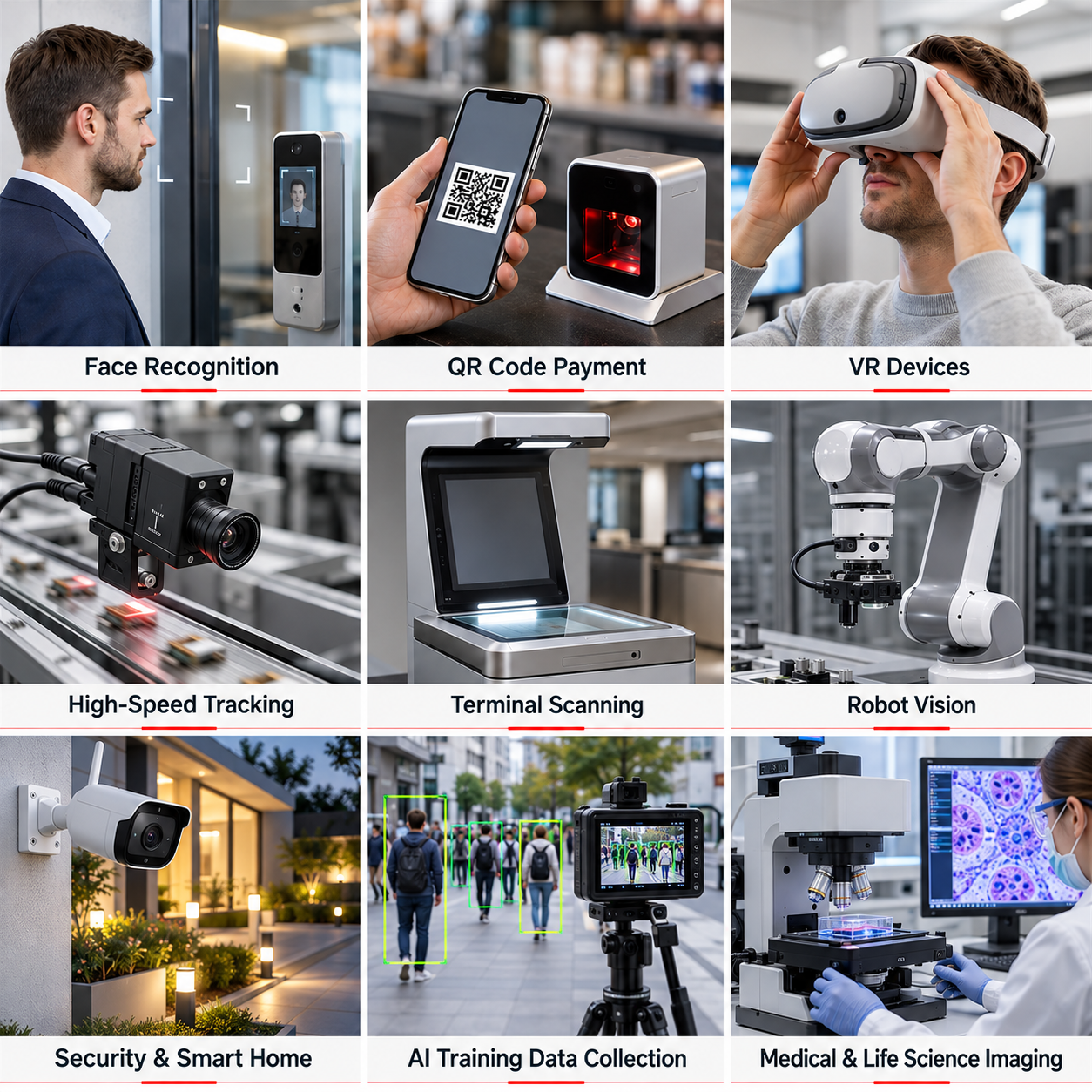
Application Areas
Face Recognition: Face capture for access control.
QR Code Payment: Code imaging for decoding.
VR Devices: Visual input for motion tracking.
High-Speed Tracking: Moving-object image capture.
Terminal Scanning: Document and barcode imaging.
Robot Vision: Images for positioning and guidance.
Security & Smart Home: Indoor and outdoor monitoring.
AI Training Data Collection: Image capture for AI datasets.
Medical & Life Science Imaging: Image capture for microscopy and research.
OEM/ODM Customization & Development Process
Match the Camera to Your Integration Requirements
A suitable camera configuration must fit both the imaging task and the device structure. Sinoseen provides OEM/ODM camera module services and can assess changes to the optical setup, flexible-circuit layout, connection arrangement, and supported operating configuration.
| Project Requirement | Areas for Engineering Review | Information to Provide |
| The camera does not fit the enclosure | Camera-head placement, FPC outline, and routing | Mechanical drawings and available space |
| cene coverage or working distance is unsuitable | Lens selection, field of view, and focus setting | Target dimensions and capture distance |
| The host connection differs from the standard design | Connector, pin assignment, and interface configuration | Host specifications and connection requirements |
| Moving targets require sharper capture | Exposure, lighting, and supported frame-rate modes | arget speed, sample images, and lighting conditions |
| he project requires infrared imaging | Filter and lens suitability | Illumination wavelength and imaging requirements |
Customization feasibility, development scope, cost, and lead time are confirmed after engineering review.
Customization Process
Step 1 — Share Your Requirements
Provide the application, host platform, required resolution and frame rate, working distance, installation space, and estimated quantity.
Step 2 — Review the Configuration
Assess the sensor operating mode, interface, lens, and mechanical arrangement. Identify any changes required for the target device.
Step 3 — Confirm Drawings and Evaluation Criteria
Agree on the configuration, connection details, mechanical revision, and sample acceptance requirements before prototype production.
Step 4 — Evaluate Samples
Test image quality, sustained frame rate, exposure behavior, host integration, and mechanical fit in the actual operating environment.
Step 5 — Approve the Production Configuration
Confirm the accepted sample, drawings, optical components, and operating configuration before proceeding with volume production.
Send Your Drawings and Imaging Requirements
About Sinoseen
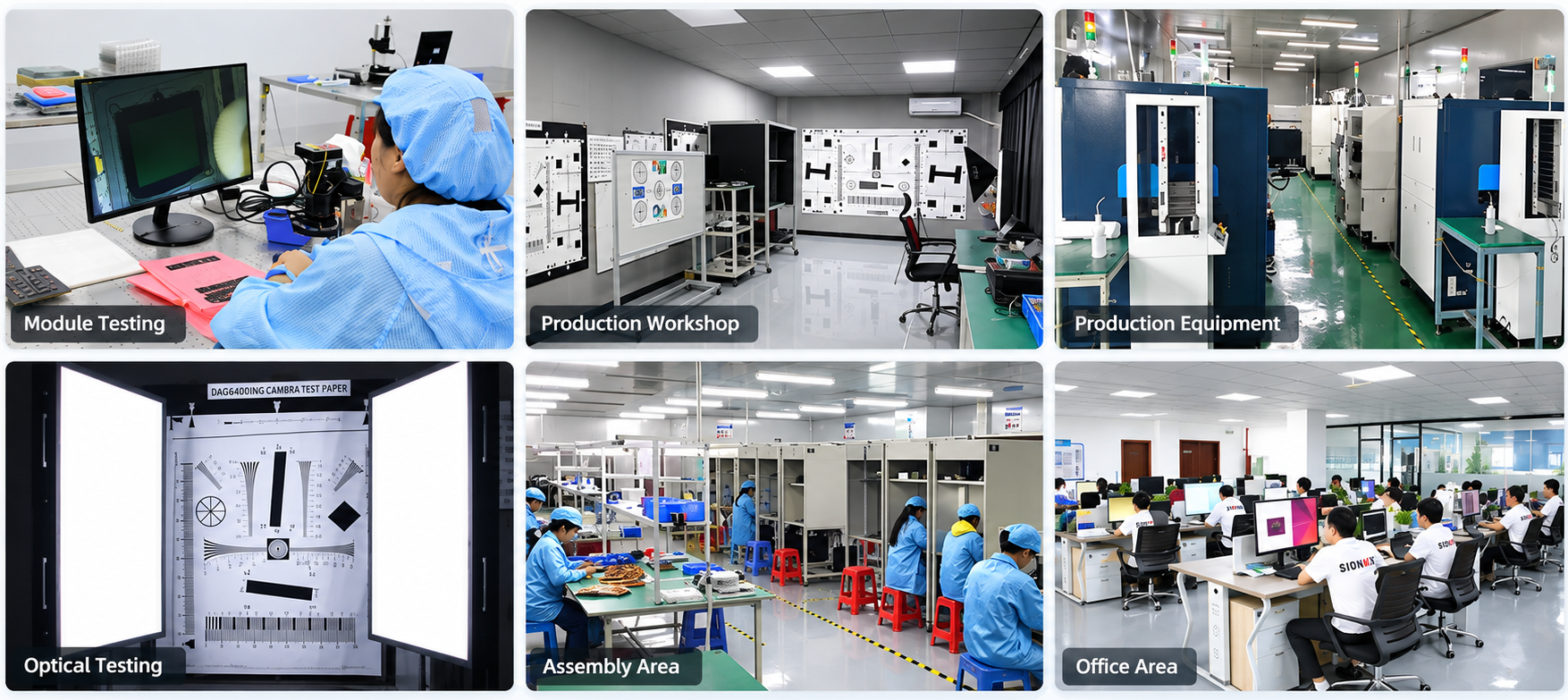
Shenzhen Sinoseen Technology Co., Ltd. was established in June 2016 and specializes in CMOS camera module design, development, manufacturing, and OEM/ODM services.
Its product portfolio includes USB, MIPI, and DVP camera modules, with services extending from development through manufacturing and after-sales support.
For embedded vision projects, Sinoseen works with customers to assess the imaging task alongside mechanical and electrical integration requirements. This helps define a camera configuration that can be evaluated in the intended device before production approval.
Certifications & Intellectual Property
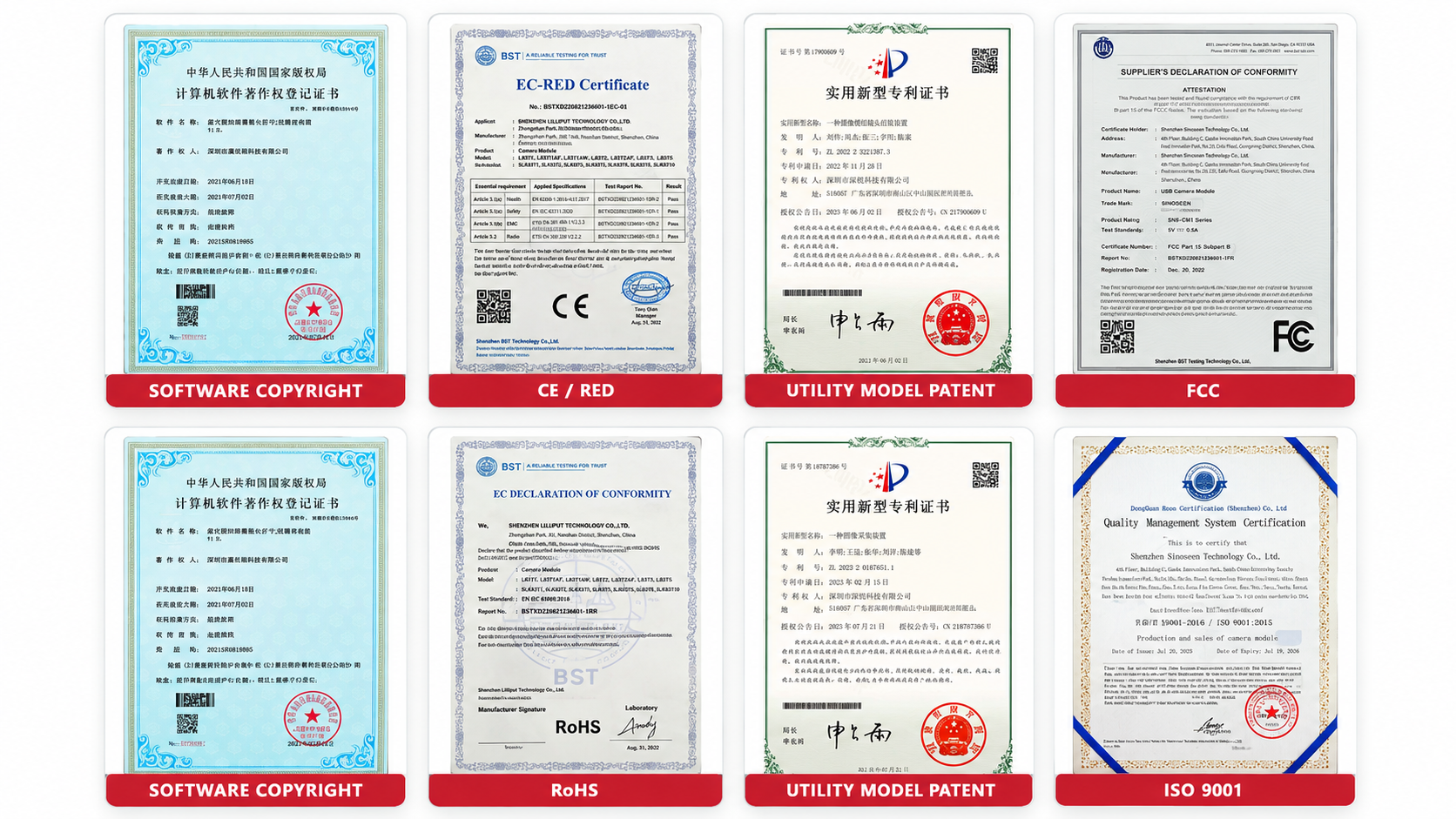
Sinoseen’s documentation includes quality management records, product compliance documents, software copyrights, and utility model patents. For your camera module project, please request the current documents applicable to the selected model and configuration, including relevant CE, FCC, or RoHS documentation.
Frequently Asked Questions
1. What is the resolution of this camera module?
The module uses two AR0234 sensors, each with a 1920 × 1200 active pixel array, or approximately 2.3MP. The host-visible video dimensions depend on the configured dual-camera output mode. Please request the current output-mode table for the selected firmware.
2. What is the benefit of a global shutter?
A global shutter exposes the image pixels at the same time, helping reduce skew and deformation caused by rolling shutter readout. It does not eliminate motion blur; suitable lighting and exposure settings are still required.
3. Does the module support 60fps in every video format?
No. The supplied specification lists up to 60fps for MJPEG and up to 30fps for YUY2. Actual frame rates depend on the selected resolution, firmware mode, exposure settings and host performance.
4. Does it provide depth maps or built-in SLAM?
Depth-map output and onboard SLAM are not specified. Stereo depth and tracking applications require suitable calibration, verified camera timing and host-side processing.
5. Are the two cameras hardware-synchronized?
The available specification does not define the synchronization method. Please confirm exposure synchronization and timestamp behavior before selecting the module for stereo measurement or tracking.