 EN
EN
 AR
AR
 DA
DA
 NL
NL
 FI
FI
 FR
FR
 DE
DE
 EL
EL
 HI
HI
 IT
IT
 JA
JA
 KO
KO
 NO
NO
 PL
PL
 PT
PT
 RO
RO
 RU
RU
 ES
ES
 SV
SV
 TL
TL
 IW
IW
 ID
ID
 SR
SR
 VI
VI
 HU
HU
 TH
TH
 TR
TR
 FA
FA
 MS
MS
 IS
IS
 AZ
AZ
 UR
UR
 BN
BN
 HA
HA
 LO
LO
 MR
MR
 MN
MN
 PA
PA
 MY
MY
 SD
SD

How to Integrate ESP32 and OV2640 Camera Modules for Smart IoT Projects?
The rapid advancement of Internet of Things (IoT) technology has created unprecedented opportunities for developers to build sophisticated smart systems that can capture, process, and transmit visual data in real-time. Modern IoT applications increasingly rely on the seamless integration of microcontrollers and camera modules to enable features such as remote monitoring, automated surveillance, and intelligent image processing. Among the most popular combinations for these applications are ESP32 and OV2640 camera modules, which together provide a powerful yet cost-effective solution for implementing computer vision capabilities in embedded systems. This integration allows developers to create compact, energy-efficient devices that can perform complex image processing tasks while maintaining wireless connectivity and low power consumption characteristics essential for IoT deployments.
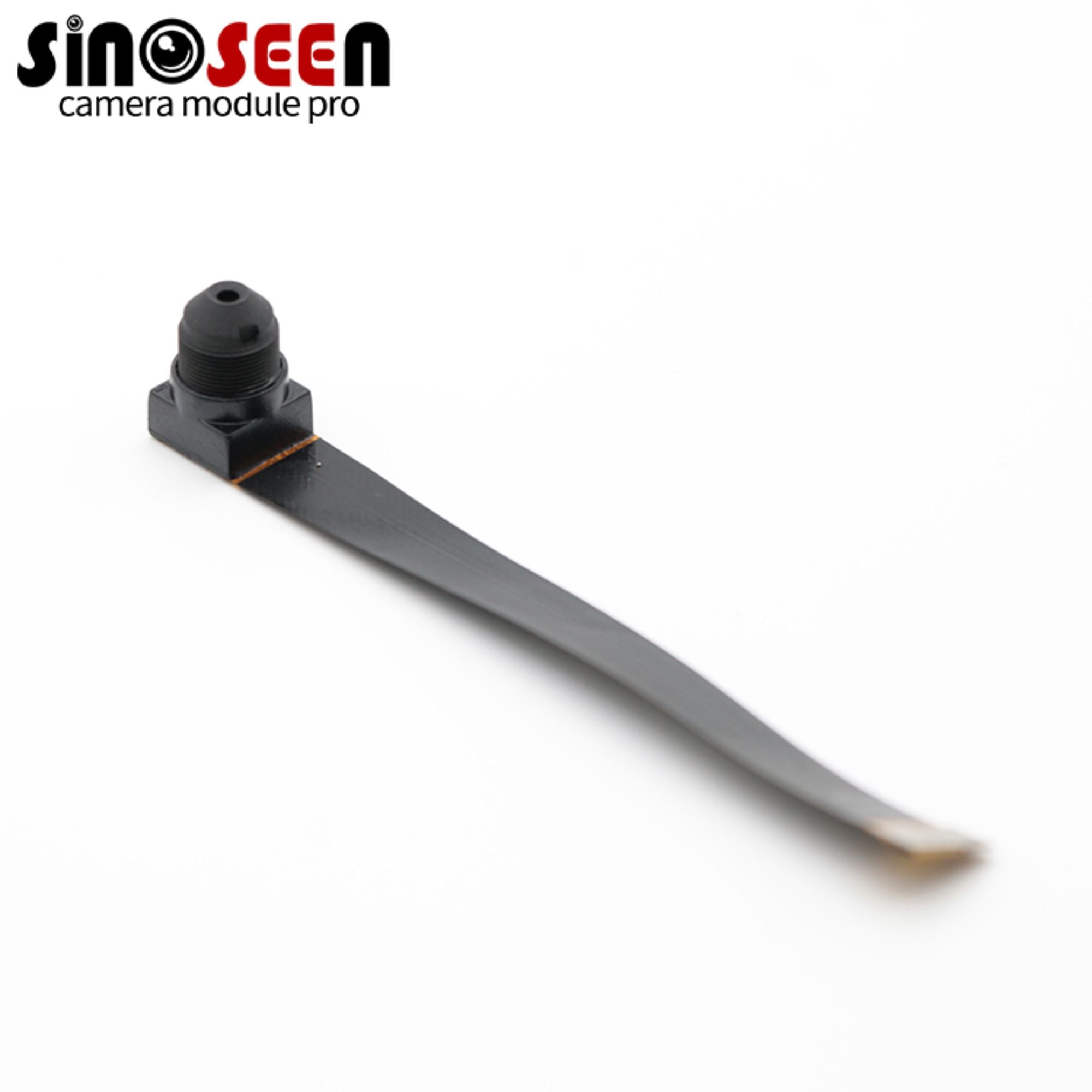
The combination of ESP32 microcontrollers with OV2640 camera sensors has emerged as a leading choice for developers seeking to implement vision-enabled IoT solutions. The ESP32 provides robust processing power, built-in WiFi and Bluetooth connectivity, and extensive GPIO capabilities, while the OV2640 camera module offers high-quality image capture with configurable resolution settings and advanced image processing features. Together, these components enable the creation of intelligent systems capable of capturing visual data, performing on-device analysis, and transmitting results to cloud platforms or local networks for further processing and storage.
Understanding ESP32 Microcontroller Architecture
Core Processing Capabilities
The ESP32 microcontroller represents a significant advancement in embedded system design, featuring a dual-core Xtensa LX6 processor running at frequencies up to 240MHz. This processing power enables the ESP32 to handle complex computational tasks while simultaneously managing multiple peripheral devices and maintaining network connectivity. The architecture includes 520KB of SRAM, which provides sufficient memory for buffering image data from camera modules and performing real-time image processing operations. Additionally, the ESP32 supports external flash memory expansion, allowing developers to store larger amounts of image data or implement more sophisticated algorithms that require additional program memory.
Wireless Communication Features
One of the most compelling aspects of ESP32 and OV2640 camera modules integration is the built-in wireless communication capabilities of the ESP32. The microcontroller includes IEEE 802.11b/g/n WiFi support, enabling direct connection to wireless networks without requiring additional communication modules. This feature is particularly valuable for IoT applications where captured images need to be transmitted to remote servers or cloud platforms for analysis and storage. The ESP32 also includes Bluetooth Classic and Bluetooth Low Energy (BLE) support, providing flexibility for local device communication and configuration scenarios.
Power Management and Efficiency
Power efficiency represents a critical consideration for IoT applications, and the ESP32 addresses this requirement through multiple power management modes and optimization features. The microcontroller supports deep sleep modes that can reduce power consumption to as low as 10 microamps, making it suitable for battery-powered applications that need to operate for extended periods. When working with camera modules, developers can implement power management strategies that activate the ESP32 and camera only when image capture is required, significantly extending battery life in remote monitoring applications.
OV2640 Camera Module Specifications
Image Sensor Technology
The OV2640 camera module incorporates advanced CMOS image sensor technology that delivers high-quality image capture capabilities in a compact form factor suitable for embedded applications. This sensor supports multiple resolution modes, including UXGA (1600x1200), SVGA (800x600), and VGA (640x480), allowing developers to optimize image quality and data transmission requirements based on specific application needs. The sensor includes built-in automatic exposure control, white balance correction, and gain adjustment features that ensure consistent image quality across varying lighting conditions commonly encountered in IoT deployment environments.
Interface and Communication Protocols
Communication between ESP32 and OV2640 camera modules occurs through standard digital interfaces that provide reliable data transmission and control capabilities. The OV2640 typically uses either DVP (Digital Video Port) or MIPI CSI-2 interfaces for image data transmission, while control commands are sent via I2C protocol. This combination enables high-speed image data transfer while maintaining simple control mechanisms for configuring camera parameters such as resolution, frame rate, and image processing settings. The standardized interface protocols ensure compatibility across different hardware platforms and simplify the integration process for developers.
Advanced Image Processing Features
Modern OV2640 camera modules include sophisticated on-chip image processing capabilities that can reduce the computational burden on the ESP32 microcontroller. These features include automatic brightness and contrast adjustment, noise reduction algorithms, and color space conversion functions that can process images before transmission to the main processor. Such capabilities are particularly valuable in ESP32 and OV2640 camera modules implementations where power efficiency and processing speed are critical requirements. The built-in image processing features also help ensure consistent image quality regardless of environmental conditions or lighting variations.
Hardware Integration Considerations
Electrical Interface Requirements
Successful integration of ESP32 and OV2640 camera modules requires careful attention to electrical interface specifications and signal integrity considerations. The ESP32 provides multiple GPIO pins that can be configured for camera interface functions, including pixel clock, horizontal sync, vertical sync, and data lines. Proper signal routing and impedance matching are essential for maintaining high-speed digital signal integrity, particularly for the pixel clock and data signals that operate at frequencies up to several tens of megahertz. Power supply design also plays a crucial role, as both the ESP32 and camera module require stable, low-noise power sources to ensure optimal performance and image quality.
Physical Layout and Mechanical Design
The physical integration of ESP32 and OV2640 camera modules involves considerations for board layout, connector placement, and mechanical mounting arrangements. Compact IoT devices require efficient use of available space while maintaining proper thermal management and electromagnetic interference (EMI) shielding. The camera module placement should consider optical requirements such as lens positioning, field of view constraints, and protection from environmental factors. Additionally, the layout should minimize the length of high-speed digital signal paths between the ESP32 and camera module to reduce signal degradation and electromagnetic emissions.
Thermal Management Strategies
Both ESP32 microcontrollers and OV2640 camera modules generate heat during operation, and effective thermal management becomes critical in compact IoT device designs. Continuous operation at elevated temperatures can affect image sensor performance, introduce noise in captured images, and reduce the overall lifespan of electronic components. Thermal design strategies may include heat sinks, thermal pads, strategic component placement for natural convection cooling, and power management algorithms that reduce heat generation during periods of low activity. These considerations become particularly important in outdoor or industrial IoT applications where ambient temperatures may be elevated.
Software Development and Programming
Development Environment Setup
Developing applications for ESP32 and OV2640 camera modules requires establishing a comprehensive development environment that includes appropriate toolchains, libraries, and debugging capabilities. The ESP-IDF (Espressif IoT Development Framework) provides the primary development platform, offering comprehensive APIs for camera interface control, image processing functions, and network communication protocols. Alternative development environments such as Arduino IDE with ESP32 extensions provide simplified programming interfaces suitable for rapid prototyping and educational applications. The chosen development environment should support real-time debugging capabilities, memory profiling tools, and performance optimization features necessary for camera application development.
Camera Driver Implementation
Implementing camera driver software for ESP32 and OV2640 camera modules involves creating low-level interface code that manages camera initialization, configuration, and image capture operations. The driver must handle timing-critical operations such as frame synchronization, pixel data capture, and buffer management to ensure reliable image acquisition. Advanced driver implementations may include features such as automatic exposure adjustment, dynamic resolution switching, and error recovery mechanisms that enhance system robustness in challenging operating conditions. Proper driver implementation also includes power management functions that can reduce camera power consumption during inactive periods.
Image Processing Algorithms
The processing capabilities of ESP32 microcontrollers enable implementation of various image processing algorithms that can extract useful information from captured images. Common algorithms include edge detection, object recognition, motion detection, and color analysis functions that support intelligent IoT applications. However, developers must carefully balance algorithm complexity with available processing power and memory constraints to maintain real-time performance. Optimization techniques such as fixed-point arithmetic, lookup tables, and algorithm simplification can help achieve acceptable performance while preserving functionality essential for specific IoT applications.
Wireless Communication and Data Transmission
WiFi Network Integration
The built-in WiFi capabilities of ESP32 microcontrollers enable seamless integration of ESP32 and OV2640 camera modules into existing wireless network infrastructure. Applications can transmit captured images to web servers, cloud platforms, or mobile applications using standard HTTP protocols or custom communication protocols optimized for image data transmission. Network security considerations include implementing WPA2/WPA3 encryption, certificate-based authentication, and secure communication protocols that protect image data during transmission. Additionally, network configuration mechanisms should support dynamic network discovery and automatic reconnection capabilities to maintain reliable connectivity in changing network environments.
Cloud Platform Integration
Modern IoT applications frequently require integration with cloud platforms that provide image storage, analysis, and distribution services. ESP32 and OV2640 camera modules can implement cloud connectivity through REST APIs, MQTT protocols, or proprietary cloud service interfaces. Cloud integration enables advanced features such as machine learning-based image analysis, remote device management, and large-scale data analytics that exceed the processing capabilities of embedded devices. However, cloud connectivity also introduces considerations for data privacy, transmission costs, and network reliability that must be addressed in the system design.
Local Network Communication
In addition to cloud connectivity, ESP32 and OV2640 camera modules can implement local network communication protocols for applications that require low-latency image transmission or operate in environments with limited internet connectivity. Local communication options include direct TCP/UDP connections, multicast protocols for broadcasting images to multiple receivers, and peer-to-peer communication between IoT devices. Local network protocols can also support real-time streaming applications where captured images need to be displayed with minimal delay on local displays or control systems.
Power Optimization Techniques
Dynamic Power Management
Implementing effective power management strategies is crucial for battery-powered IoT applications using ESP32 and OV2640 camera modules. Dynamic power management techniques involve automatically adjusting system performance based on current activity levels and power supply conditions. The ESP32 supports multiple power modes including active, modem sleep, light sleep, and deep sleep modes, each offering different levels of power consumption and wake-up capabilities. Camera modules can also implement power-down modes during inactive periods, significantly reducing overall system power consumption while maintaining the ability to respond quickly to trigger events.
Event-Driven Operation
Event-driven operation models can dramatically improve power efficiency in ESP32 and OV2640 camera modules implementations by activating image capture and processing functions only when specific conditions are met. External sensors such as motion detectors, proximity sensors, or environmental monitors can trigger camera operation, allowing the system to remain in low-power states during periods of inactivity. This approach is particularly effective for security monitoring, wildlife observation, and industrial monitoring applications where continuous image capture is not required. Implementing efficient interrupt handling and wake-up mechanisms ensures rapid response to trigger events while maintaining low average power consumption.
Communication Protocol Optimization
Optimizing wireless communication protocols can significantly impact overall system power consumption, especially in applications where images are transmitted frequently. Techniques such as image compression, adaptive transmission schedules, and intelligent buffering can reduce the amount of data transmitted and the frequency of network connections. Additionally, implementing efficient network protocols that minimize connection establishment overhead and support batch data transmission can reduce the energy required for wireless communication operations. These optimizations are particularly important for battery-powered devices that need to operate for extended periods without maintenance.
Security and Privacy Considerations
Data Encryption and Protection
Security considerations for ESP32 and OV2640 camera modules extend beyond basic network encryption to encompass comprehensive data protection strategies throughout the entire system lifecycle. Image data encryption should be implemented both during transmission and storage operations to prevent unauthorized access to sensitive visual information. The ESP32 includes hardware-based encryption acceleration that can support AES encryption algorithms without significantly impacting system performance. Additionally, secure key management protocols ensure that encryption keys are properly generated, distributed, and rotated according to security best practices.
Device Authentication and Authorization
Implementing robust device authentication and authorization mechanisms prevents unauthorized access to camera functions and ensures that only legitimate users can control image capture and transmission operations. Certificate-based authentication provides strong security for device identification, while role-based access control systems can limit specific users to appropriate camera functions. These security measures become particularly important in commercial and industrial applications where unauthorized camera access could compromise privacy or security. Regular security updates and vulnerability assessments help maintain system security against evolving threats.
Privacy Protection Measures
Privacy protection represents a critical consideration for IoT applications that capture images in environments where individuals may have reasonable expectations of privacy. ESP32 and OV2640 camera modules can implement privacy protection features such as automatic face blurring, selective area masking, and configurable image retention policies that comply with relevant privacy regulations. Additionally, local image processing capabilities can enable privacy-preserving analysis that extracts necessary information without transmitting identifiable image content to remote servers or cloud platforms.
Real-World Applications and Use Cases
Smart Home Security Systems
Home security applications represent one of the most popular use cases for ESP32 and OV2640 camera modules, providing homeowners with affordable, customizable monitoring solutions that can integrate with existing smart home infrastructure. These systems can implement motion detection algorithms that automatically capture images when activity is detected, send notifications to mobile devices, and store images locally or in cloud storage services. Advanced implementations may include facial recognition capabilities that can distinguish between family members and potential intruders, reducing false alarms and providing more intelligent security monitoring. The wireless connectivity of ESP32 enables easy installation without requiring extensive wiring, making these systems accessible to a broader range of users.
Industrial Monitoring and Quality Control
Industrial applications benefit from the robust performance and reliability characteristics of ESP32 and OV2640 camera modules in challenging operating environments. Manufacturing facilities can deploy these systems for automated quality control inspections, monitoring production line operations, and detecting equipment malfunctions or safety hazards. The ability to implement custom image processing algorithms enables specialized inspection tasks such as dimensional measurements, defect detection, and assembly verification. Additionally, the wireless communication capabilities facilitate integration with existing industrial control systems and enable remote monitoring of multiple production locations from centralized control centers.
Environmental Monitoring and Research
Environmental monitoring applications leverage the low power consumption and weatherproof packaging options available for ESP32 and OV2640 camera modules to create autonomous monitoring stations that can operate in remote locations for extended periods. These systems can capture time-lapse images of environmental changes, monitor wildlife behavior, and document weather-related phenomena for research purposes. Solar panel charging systems and efficient power management algorithms enable year-round operation in locations without access to conventional power sources. The wireless connectivity enables researchers to access captured data remotely and adjust monitoring parameters without physically visiting remote installation sites.
FAQ
What are the key advantages of using ESP32 with OV2640 camera modules?
The combination of ESP32 and OV2640 camera modules offers several significant advantages for IoT applications. The ESP32 provides powerful dual-core processing capabilities that can handle real-time image processing while maintaining wireless connectivity through built-in WiFi and Bluetooth. The OV2640 camera module delivers high-quality image capture with configurable resolution settings and built-in image processing features. Together, these components create a cost-effective solution that requires minimal external components while providing comprehensive functionality for vision-enabled IoT applications. The standardized interfaces and extensive software library support also simplify development and reduce time-to-market for IoT projects.
How much power do ESP32 and OV2640 camera modules typically consume?
Power consumption for ESP32 and OV2640 camera modules varies significantly based on operating mode and configuration settings. During active image capture and wireless transmission, the combined system typically consumes 200-400mA at 3.3V, depending on processing complexity and network activity. However, implementing power management strategies such as deep sleep modes and event-driven operation can reduce average power consumption to as low as 10-50mA for battery-powered applications. The actual power consumption depends on factors such as image capture frequency, wireless transmission intervals, processing algorithm complexity, and environmental conditions. Proper power optimization can enable battery-powered operation for several months or even years in low-duty-cycle applications.
What image processing capabilities can be implemented on ESP32 with camera modules?
ESP32 and OV2640 camera modules can implement various image processing algorithms, although processing complexity is limited by available memory and computational resources. Basic image processing functions include color space conversion, brightness and contrast adjustment, simple filtering operations, and basic edge detection algorithms. More advanced capabilities may include motion detection, simple object recognition, barcode scanning, and basic computer vision algorithms. However, complex machine learning algorithms and high-resolution image processing typically require external processing resources or cloud-based analysis. Developers can optimize algorithm performance through techniques such as fixed-point arithmetic, lookup tables, and algorithm simplification to achieve acceptable real-time performance within system constraints.
How can ESP32 and OV2640 camera modules connect to cloud services?
ESP32 and OV2640 camera modules can connect to various cloud services through standard internet protocols and cloud platform APIs. Common connectivity options include HTTP/HTTPS REST APIs for uploading images to web servers, MQTT protocols for real-time messaging and control, and proprietary cloud service interfaces provided by platforms such as Amazon AWS, Google Cloud, or Microsoft Azure. The connection process typically involves WiFi network configuration, authentication credential management, and implementation of appropriate communication protocols. Cloud connectivity enables advanced features such as remote image storage, machine learning-based analysis, device management, and integration with mobile applications or web dashboards for monitoring and control purposes.